

Herb-roasted turkey is an easy, delicious way to prepare a juicy, golden-brown turkey for your special holiday occasions. It's made with a simple herb butter with fresh rosemary, thyme, and sage. This easy-to-make oven-roasted turkey is full of flavor and is sure to impress.
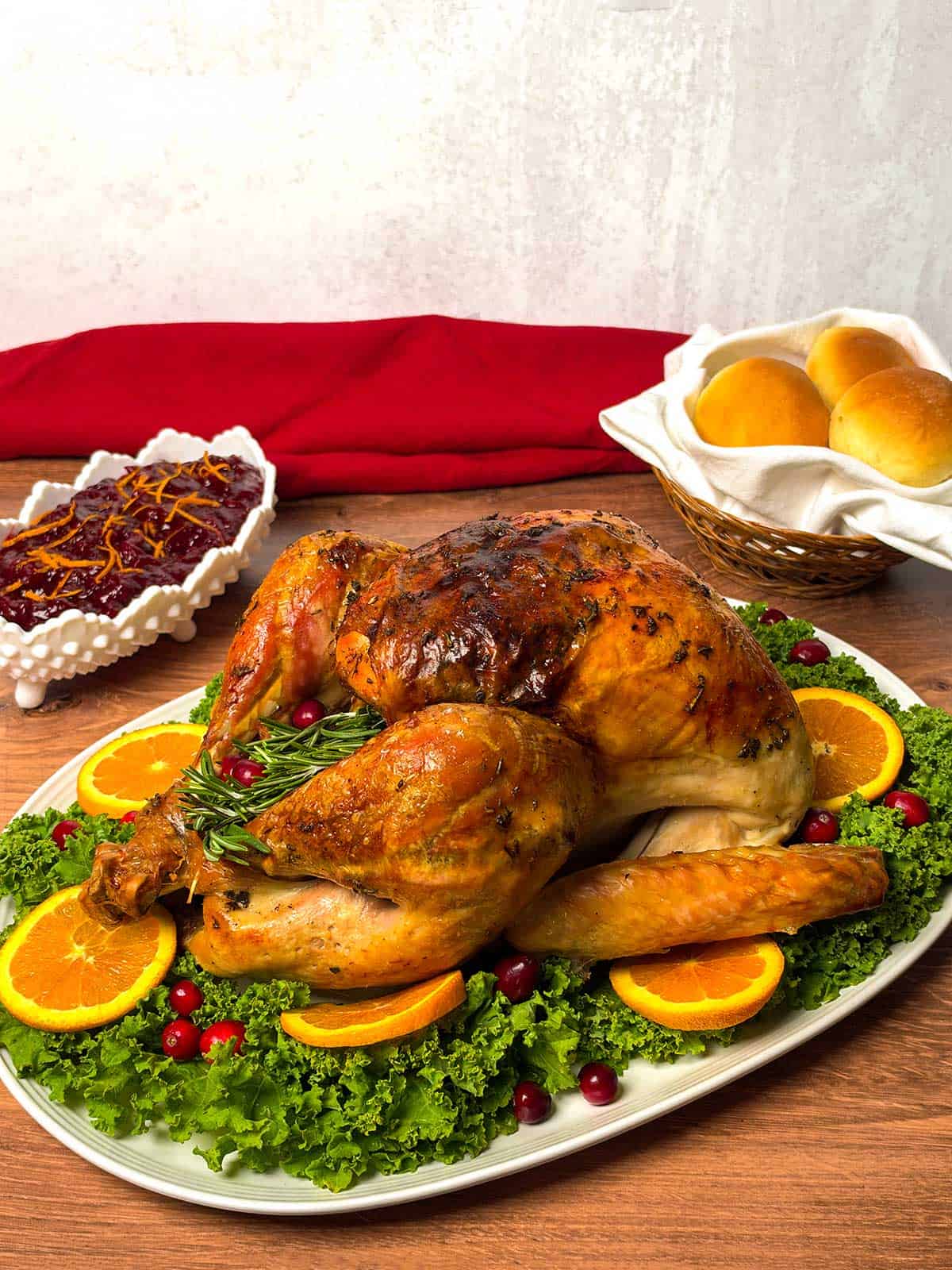
I tested this recipe using a 12-pound frozen Butterball turkey. Once thawed and flavored with herb butter, the turkey was roasted at 350°F for 2 hours and 45 minutes. The result was a golden-brown turkey with tender, juicy meat and a subtle herb flavor.
Jump to:
Quick Look at the Recipe
- Turkey size: 12 pounds, fully thawed
- Thaw first: About 4 days in the refrigerator; keep refrigerated while thawing
- Prep time: 20 minutes
- Oven temperature: 350°F
- Cook time: Approximately 2½ to 3 hours (2 hours and 45 minutes in my test)
- Minimum internal temperature: 165°F in the thickest part of the breast and innermost part of the thigh
- Resting time after roasting: 30 minutes
- Difficulty level: Easy
- Make-ahead: Thaw in advance; prepare and roast on serving day
- Leftover-friendly: Absolutely! Refrigerate leftovers within two hours of cooking and use within 3 to 4 days. In some ways, the leftovers are the best part.
Why This Recipe Works
- Simple ingredients: Butter and fresh herbs give an otherwise bland turkey a wonderful flavor.
- No additional brining required: The Butterball turkey used in my testing was enhanced with a salt solution, helping keep it moist without an additional brining step.
- Perfect for holiday entertaining: A 12-pound turkey provides plenty of servings for Thanksgiving dinner, with delicious leftovers.
- Tested in my kitchen: This recipe includes actual roasting times and practical tips from preparing my own Thanksgiving turkey.
Ingredients - Here's What You'll Need
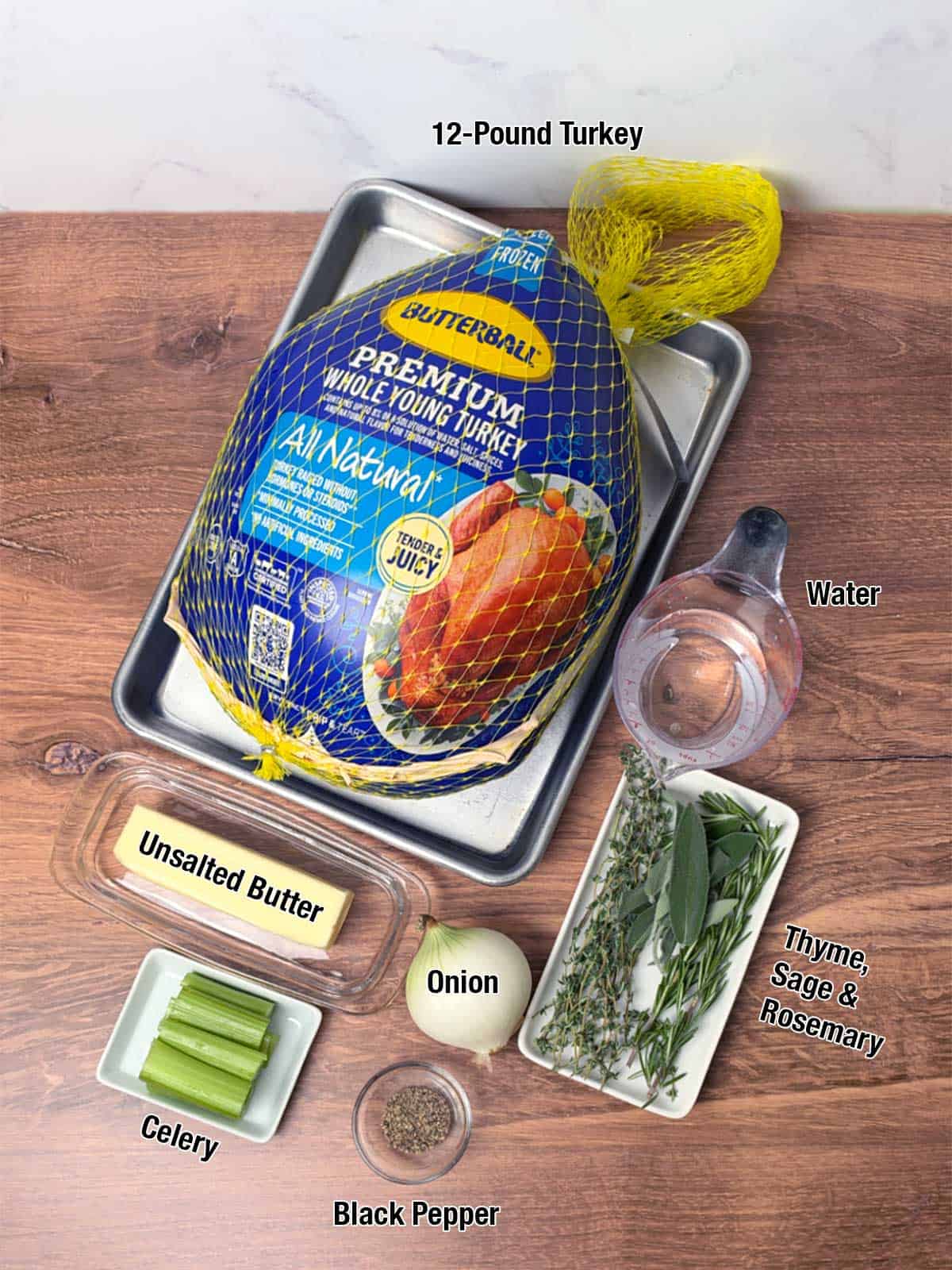
Simple ingredients - maximum flavor. The herb butter combines softened butter, fresh rosemary, thyme, sage, and black pepper. Onion, celery, and additional herb sprigs add aroma to the turkey cavity.
How to Roast a Turkey - Step-by-Step
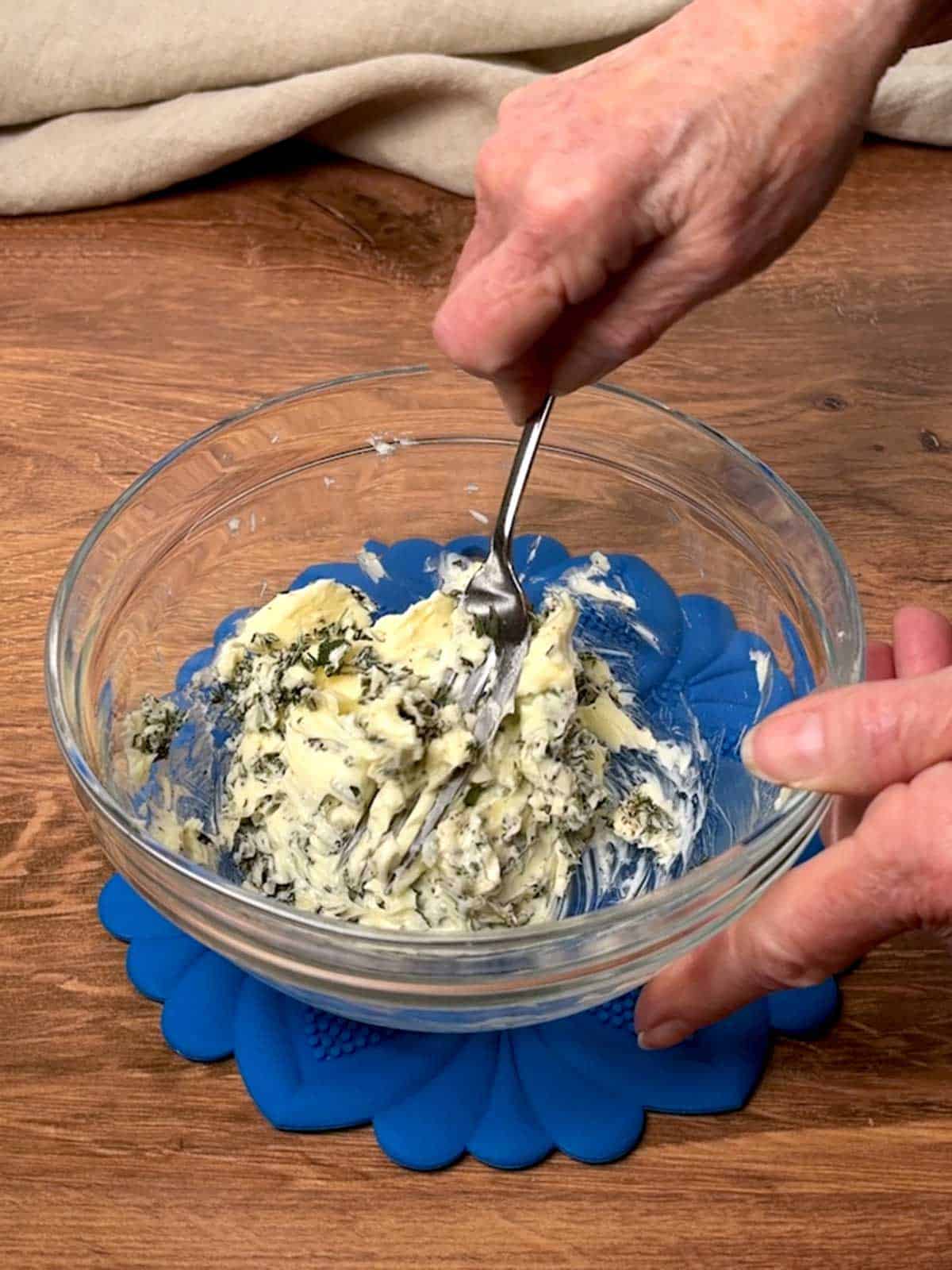
- Make the herb butter: Combine softened butter, chopped rosemary, chopped thyme, chopped sage, and black pepper in a small bowl.
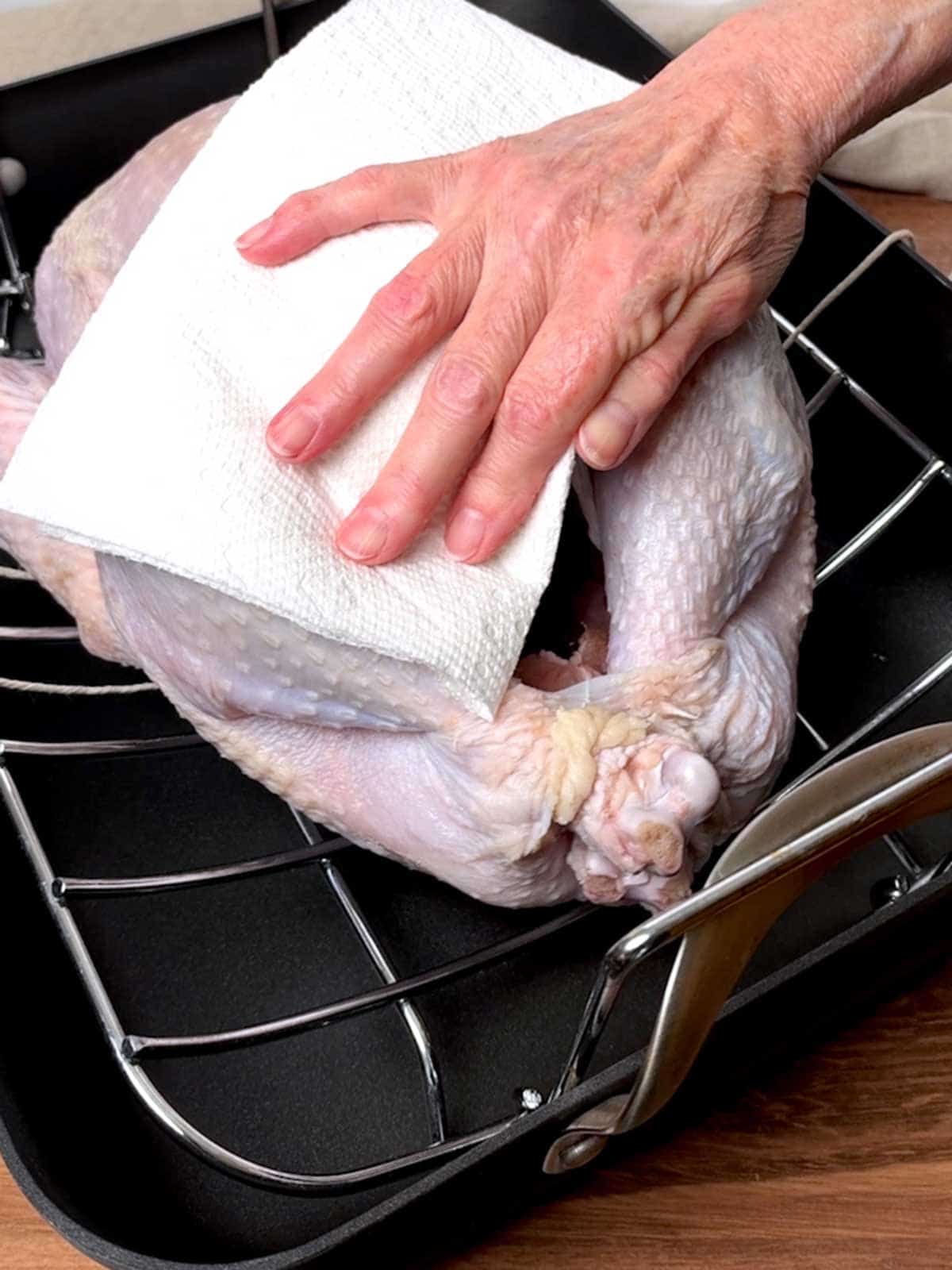
- Prepare the turkey: Remove the completely thawed turkey from its packaging and drain well. Remove the neck and giblets from the cavities, if included. If desired, use for giblet gravy. Place the turkey on a rack in a roasting pan, and pat thoroughly dry with paper towels.
- Add the herb butter: Carefully loosen the skin over the turkey breast by hand without tearing it. Then, spread about two-thirds of the herb butter under the skin, and spread the remaining herb butter over the outside of the turkey. This is the messy part!
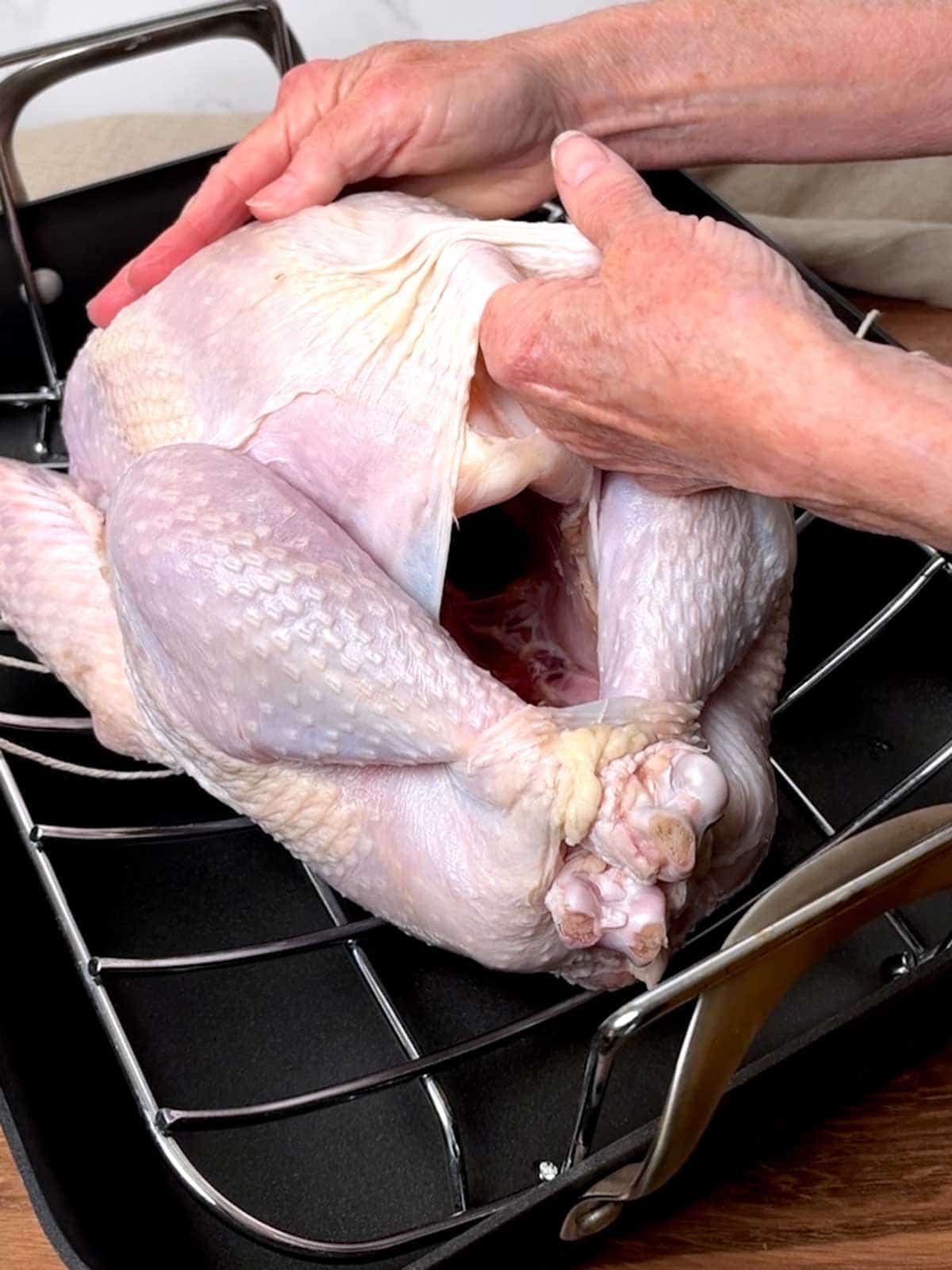
- Add the aromatics: Place a quartered onion, two stalks of celery cut into pieces, and several sprigs of rosemary and thyme in the turkey's cavity.
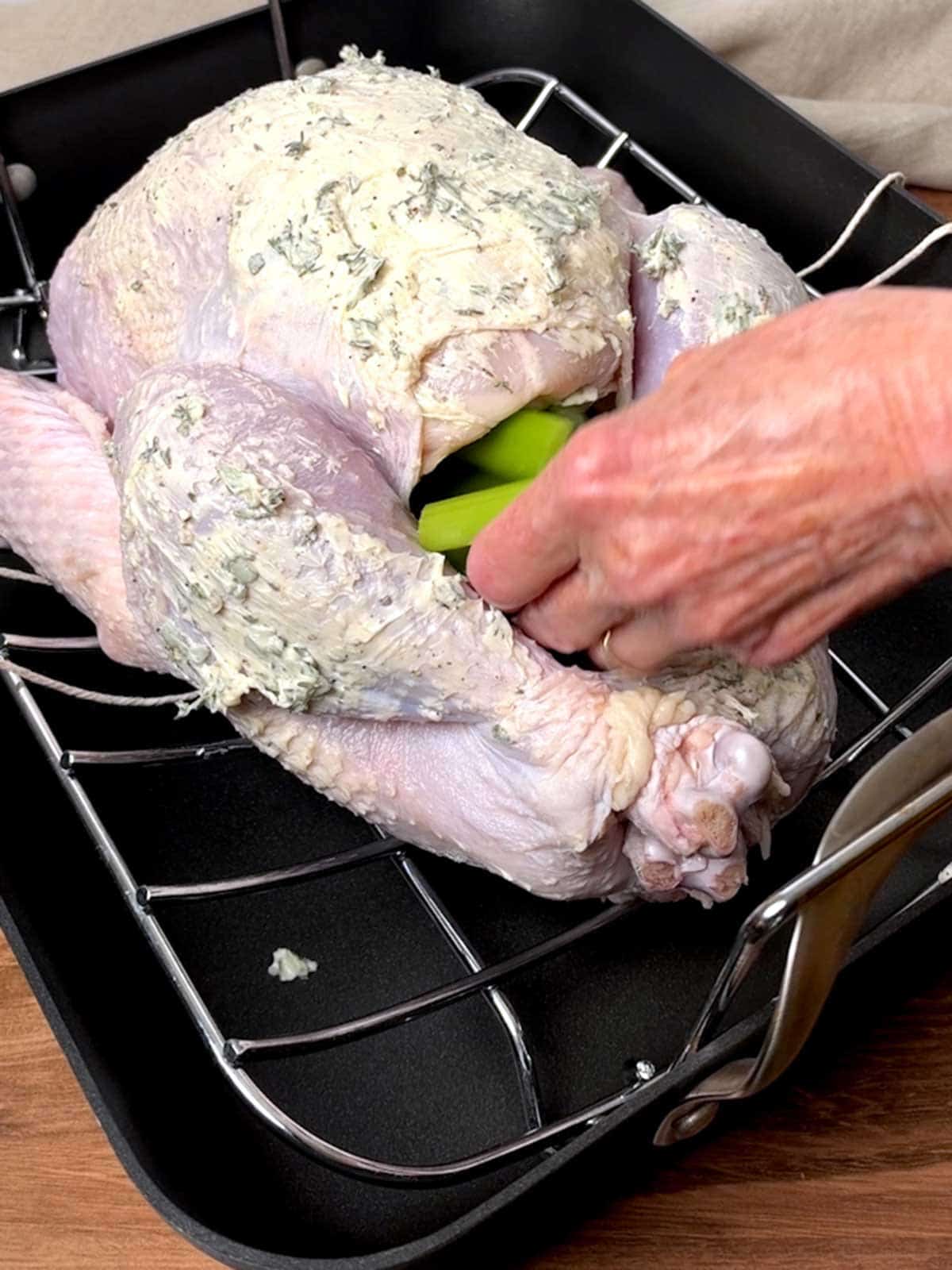
- Prepare for roasting: If using, insert a temperature probe into the thickest part of the turkey breast, avoiding bones. Pour a half cup of water into the bottom of the roasting pan. This adds moisture during roasting. To make it easier to remove the roasted turkey from the pan, you can also make a simple lifting sling using kitchen twine. See my Test Kitchen Tips below.
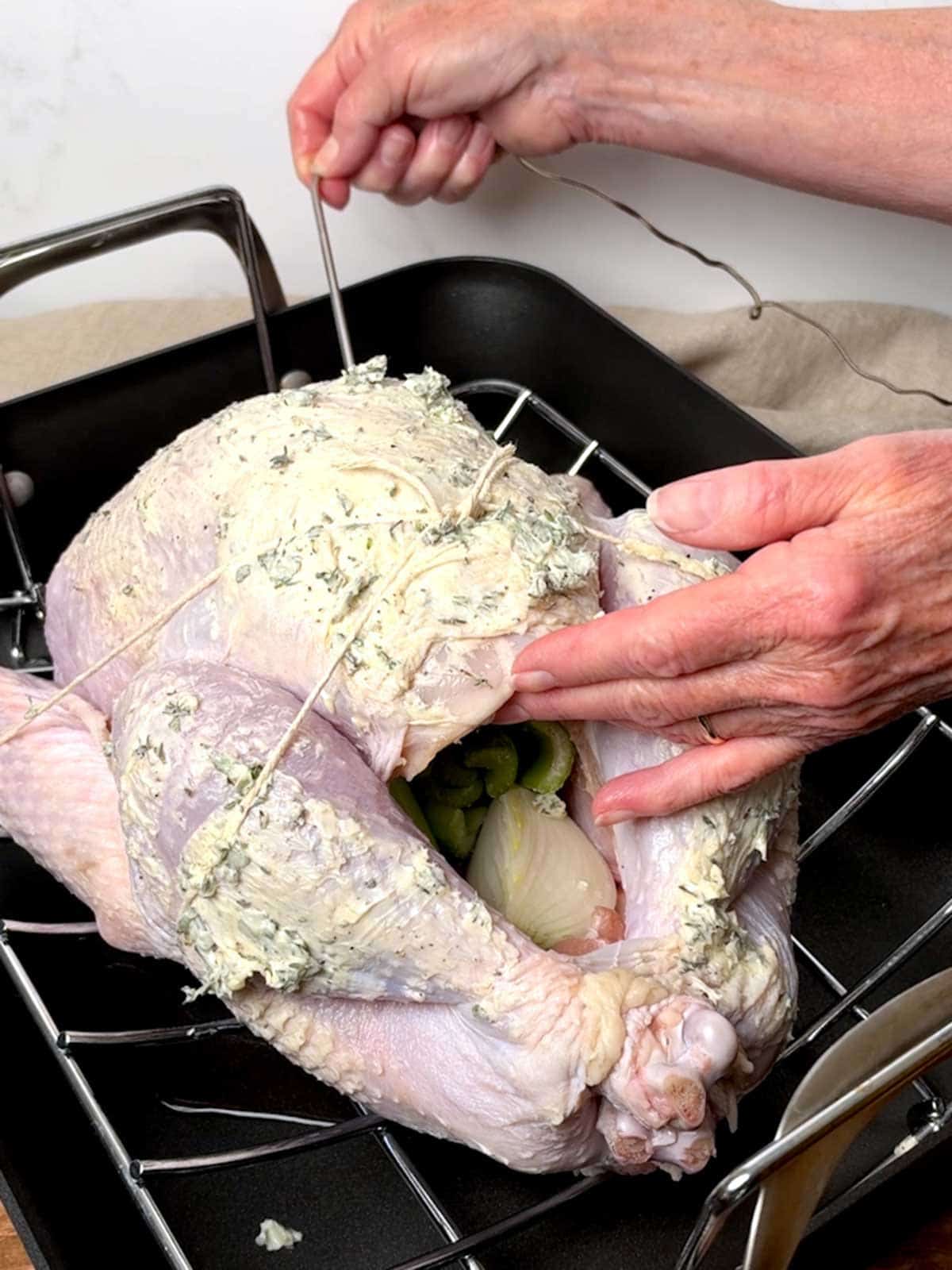
- Roast the turkey: Roast the turkey, uncovered, in the preheated 350°F oven. Check the turkey's internal temperature before the expected finish time, since actual cooking times vary depending on the turkey's temperature and your oven. The turkey must reach at least 165°F in the thickest part of the breast and the innermost portions of the thigh. Loosely tent the top with aluminum foil if the skin becomes too brown before the turkey is fully cooked.
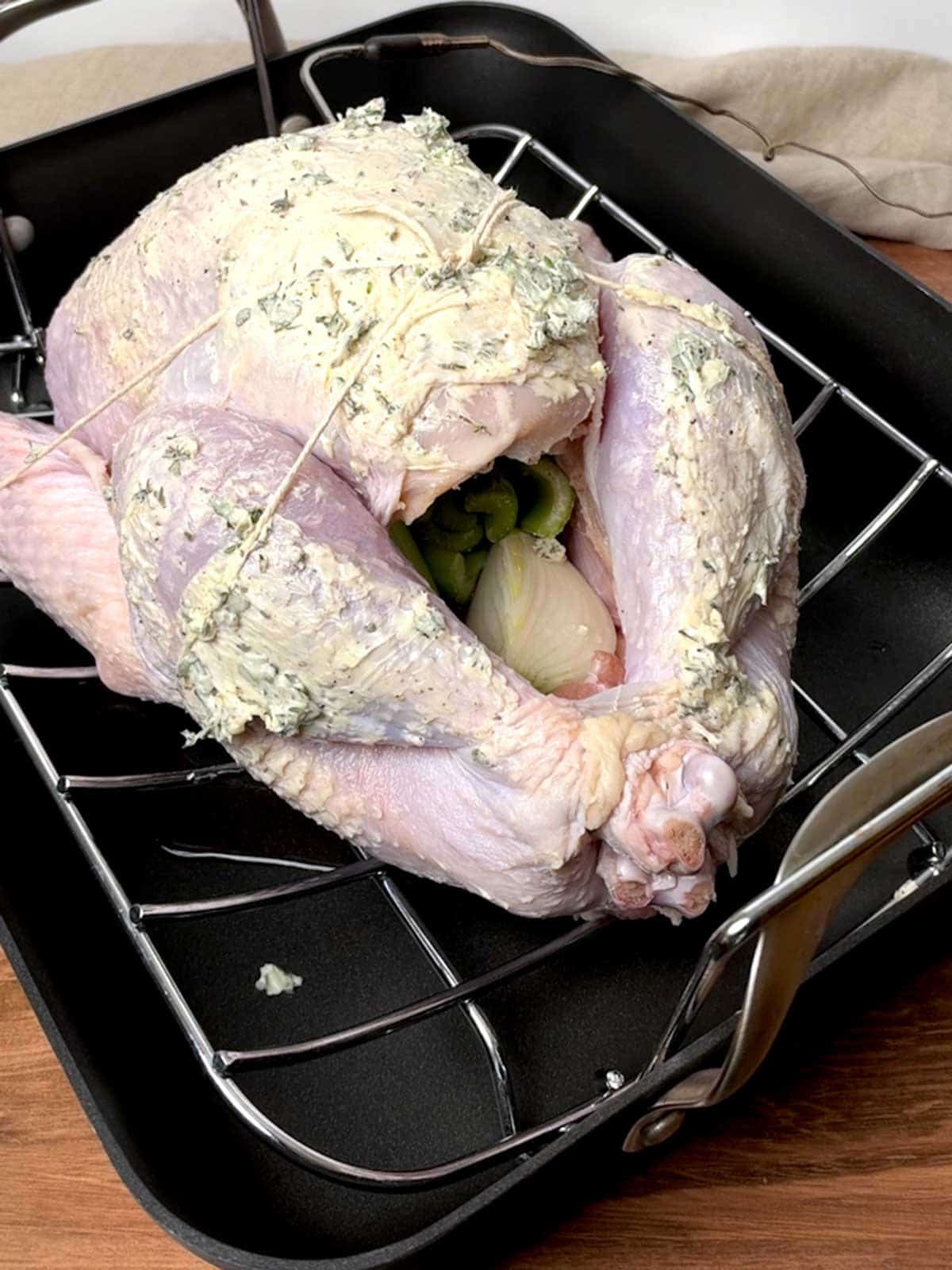
- Rest and serve: Remove the turkey from the oven and carefully transfer it to a carving board or platter. Let it rest for about 30 minutes before serving.
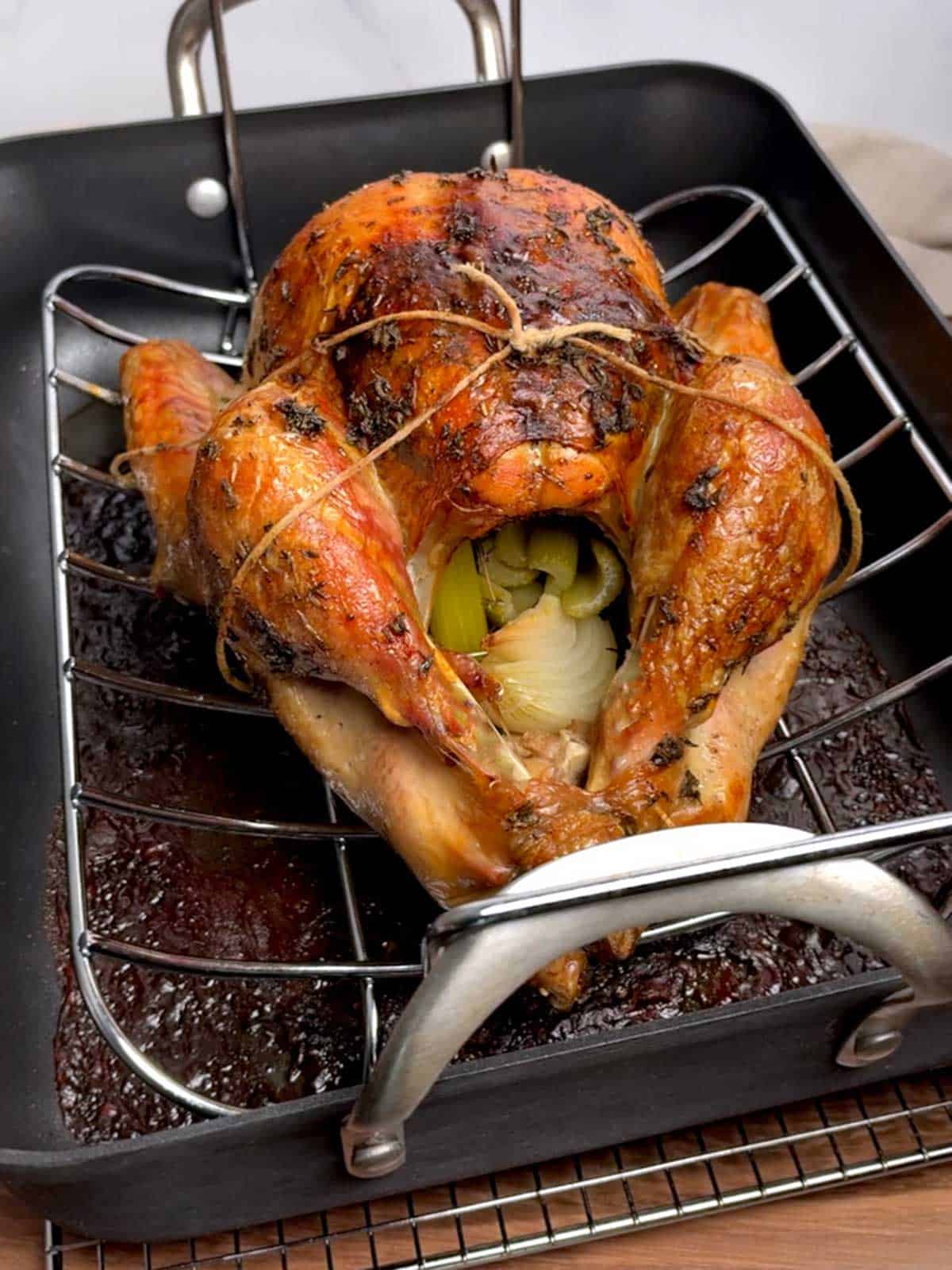
As you can see, this Herb-Roasted Turkey was not complicated to make. All you need is some fresh herb butter, onion, celery, some additional fresh herbs, and a frozen turkey to create a showpiece for your holiday table. Yum!
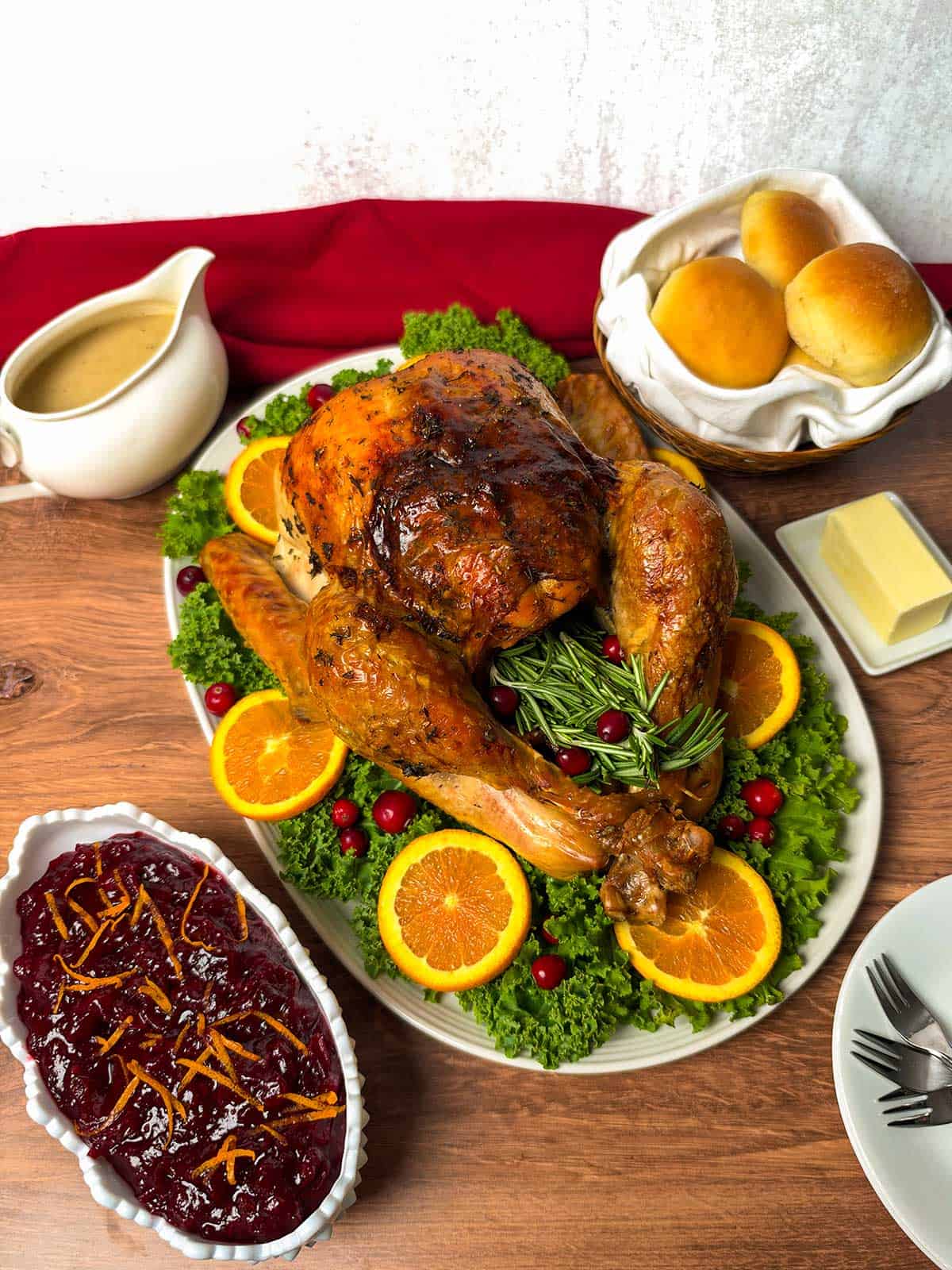
PudgeFactor's Test Kitchen Tips
- Make a simple turkey-lifting sling: Years ago, Butterball included a kitchen twine sling that made lifting the turkey out of the roasting pan easy. For this turkey, I made my own sling using about 46 inches of kitchen twine, tying the two ends together. I placed the sling across the roasting pan rack before adding the turkey, and positioned one side under the legs and the other under the wings. The 46-inch length worked, but a slightly longer piece would have given more room to handle. If you follow this technique, be sure to use food-safe cotton kitchen twine.
- Use an instant-read thermometer to double-check doneness. Maybe it's just me, but I find positioning the probe correctly can be challenging. Therefore, in addition to the temperature probe that I add at the beginning, I use an instant-read thermometer to check different locations in the turkey, including the breast and thighs, after about 2 ½ hours.
- Cooking temperature is more important than time: Although my turkey was done after 2 hours and 45 minutes, that time is a reference, not a guarantee. Different ovens perform differently. Also, your turkey may be colder or warmer than mine when it goes into the oven. That's why checking the turkey's internal temperature at various locations is important. Although the USDA recommends a minimum internal temperature of 165°F, our family prefers a turkey cooked to a higher temperature to minimize the reddish coloration around the joints that is often present at the minimum temperature.
- Don't add extra salt without checking the turkey label: My frozen Butterball turkey was already brined in a salt solution. Therefore, I didn't need to add any more salt. If you're using a different turkey, check the label before brining and/or adding salt.
- To tent or not to tent: Conventional wisdom suggests that you should tent your turkey when it's removed from the oven. I prefer skipping the tenting because it usually softens the crispy skin. It's a personal preference.
In Case You Were Wondering
Remove the meat from the bones and refrigerate it in airtight containers within two hours of cooking. Properly refrigerated leftover turkey will keep for 3 to 4 days. For longer storage, freeze it. Leftover turkey is delicious in sliders, casseroles, and homemade turkey soup.
Everyone has their favorite sides. For my family, our favorites are Buttery Dinner Rolls, Make-Ahead Southern Cornbread Stuffing with Sausage, Make-Ahead Broccoli Rice Casserole, Easy Make-Ahead Spinach Gratin, Homemade Cranberry Sauce, and Pecan Pie. All of these recipes can be made ahead of time, producing an almost stress-free holiday dinner.
How long does it take to roast a 12-pound turkey at 350°F? In my testing, a fully thawed 12-pound Butterball turkey took 2 hours and 45 minutes to roast at 350°F. As a general guideline, plan on approximately 2½ to 3 hours, but begin checking the internal temperature before the expected finish time. The turkey must reach at least 165°F in the thickest part of the breast and innermost part of the thigh.
Did you make this recipe? We'd love to know how it turned out! Leave a review below. Then, share a picture on Instagram and tag @pudgefactor so we can see it.
Don't forget to follow us on Pinterest, Facebook, YouTube, Flipboard, and Instagram.
Thank you so much for visiting PudgeFactor. We hope you'll come back!
Recipe
Want to Save This Recipe?
Enter your email & I'll send it to your inbox. Plus, enjoy weekly doses of culinary inspiration as a bonus!
By submitting this form, you consent to receive emails from Pudge Factor.
Herb-Roasted Turkey
Equipment
- Large Roasting Pan (See Tip 1)
- Cooking thermometer
Ingredients
Herb Butter
- ½ cup (1 stick, 4 ounces, 113 grams) unsalted butter
- 1 Tablespoon fresh rosemary, finely chopped
- 1 Tablespoon fresh thyme leaves, chopped
- 1 Tablespoon fresh sage, chopped
- ½ teaspoon freshly ground black pepper
Herb Roasted Turkey
- 12 pound frozen Butterball turkey, fully thawed
- Herb butter from above
- 1 medium onion, peeled and quartered
- 2 stalks of celery, cut into 2 to 3 inch pieces
- Several sprigs of fresh rosemary and thyme
- ½ cup (4 ounces, 113 grams) water
Instructions
Herb Butter
- Combine the softened butter, rosemary, thyme, sage, and black pepper in a small bowl. Mix thoroughly. Set aside.
Herb Roasted Turkey
- Preheat the oven to 350°F. Position the oven rack in the lower third of the oven. Remove the neck and giblets from the fully thawed turkey. (See Tip 2)
- Make a simple sling to easily remove the turkey from the roasting pan by tying the ends of a piece of cooking twine that is at least 46 inches long together. Lay the sling across the roasting pan. (See Tip 3)
- Tuck the turkey wings under the turkey, place it on the sling in the roasting pan, and position the sling under the legs and wings. Pat the turkey dry with paper towels.
- Gently loosen the skin over the turkey breast without tearing it. Spread approximately ⅔ of the herb butter under the skin, distributing it evenly over the breast. Rub the remaining butter over the outside of the turkey. (See Tip 4)
- Place the quartered onion, celery, and fresh herb sprigs loosely inside the turkey cavity. Pour ½ cup of water into the bottom of the roasting pan.
- Roast the turkey, uncovered, in the preheated 350°F oven for approximately 2 ½ to 3 hours. Begin checking the internal temperature after about 2 ½ hours. If the skin becomes too brown, loosely tent the turkey with aluminum foil.
- The turkey is done when a food thermometer registers at least 165°F in the thickest part of the breast and the innermost part of the thigh. (See Tip 5)
- When done, remove the turkey from the oven and transfer it to a carving board or serving platter. Allow to rest for at least 30 minutes before serving. (See Tip 6)
- Yield: 8 servings (See Tip 7)
Video
Tips/Notes
- I used a large roasting pan, but you could also use a disposable aluminum roasting pan.
- If desired, use the giblets for giblet gravy.
- Be sure to use food-grade cooking twine.
- This is the messy part of making this recipe!
- I like to cook the turkey a bit more once it reaches 165°F. The reason is that at 165°F, the joints can still look a bit reddish. I actually cooked this turkey to 194°F. This is a personal preference.
- Many recipes will indicate that you should tent the turkey with aluminum foil when it's removed from the oven. My preference is to skip the tenting. The reason is that tenting tends to soften the crisp skin. This is a personal preference.
- Consider making sliders, casseroles, or soup with the leftovers.
Leave a Reply