
For years, I wanted to make individual quiches that were every bit as satisfying as a slice from a full-sized quiche. The problem wasn't the filling. It was the crust.
Traditional pie crusts often shrink during blind baking. Coupled with that were the mini tart pans that were simply too shallow. Finally, things came together once I had developed my Savory French Pastry Dough and paired it with deeper mini-tart pans.
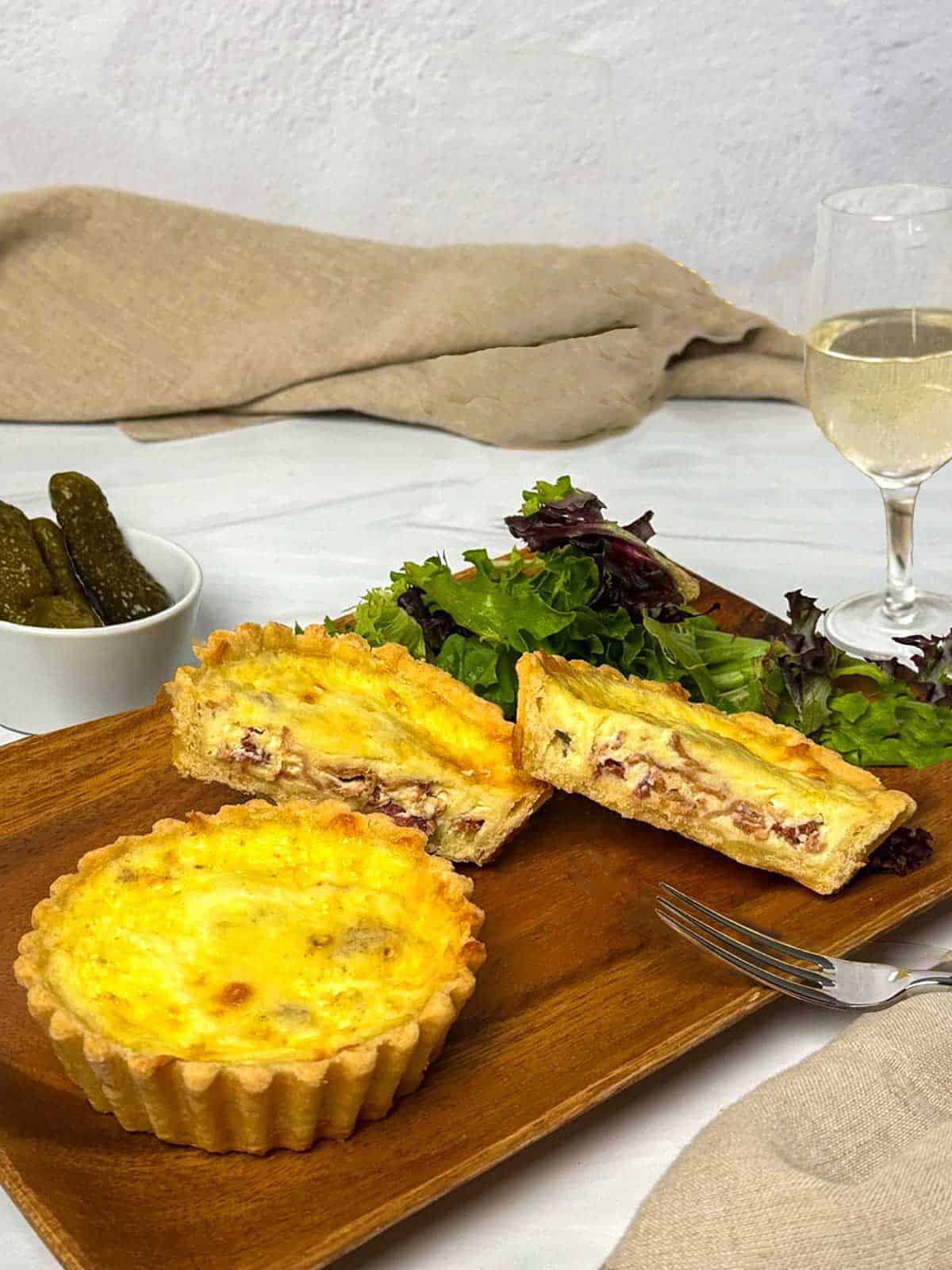
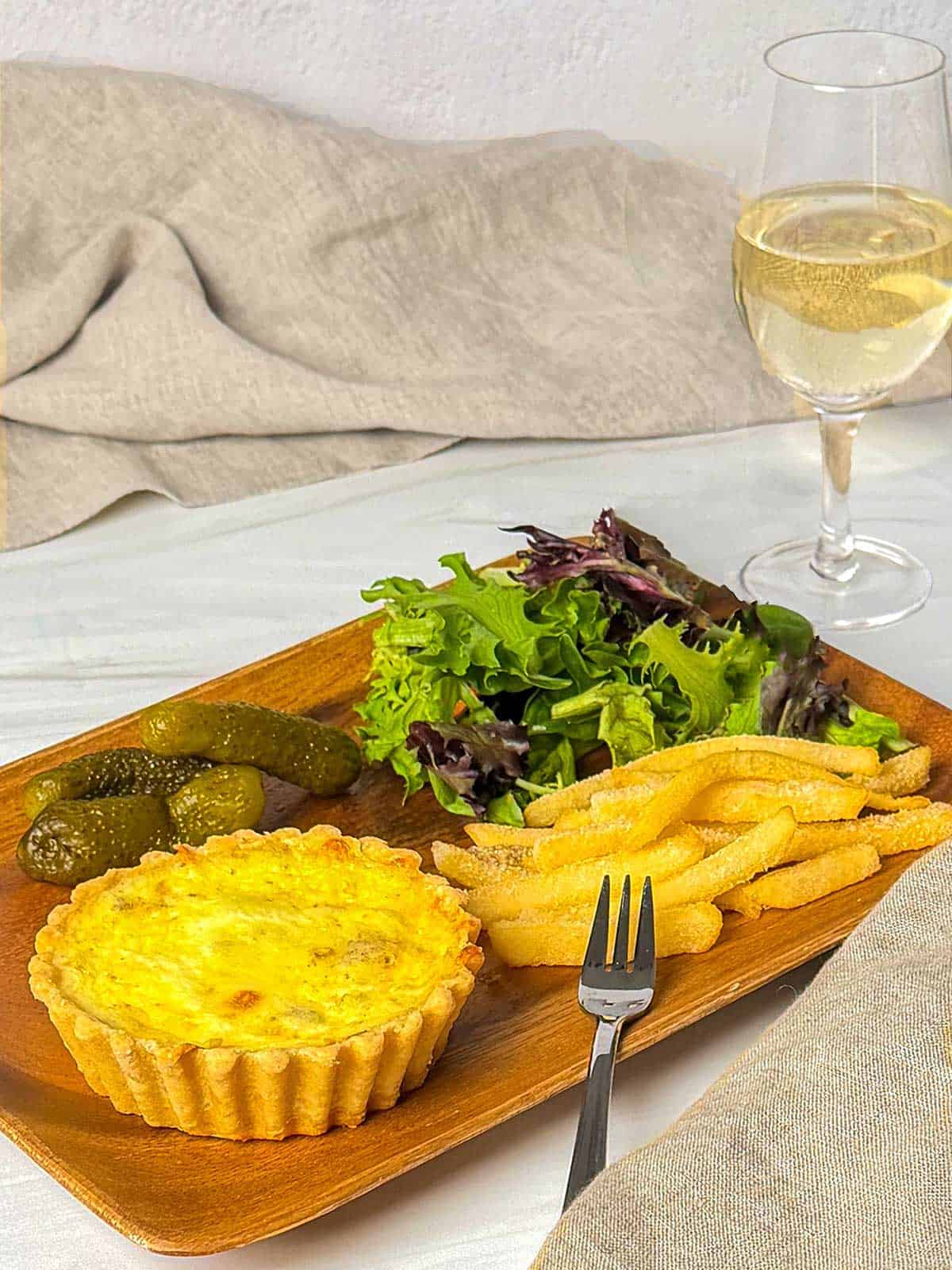
The result is these Mini Quiche Lorraines. These delicious individual quiches combine a buttery, flaky crust with creamy custard, Gruyère cheese, and bacon. Better still, they freeze and reheat beautifully.
During testing, I also created a Mushroom Gruyère version using Madeira-enhanced duxelles. This variation has become my husband's favorite. In fact, he's already requested multiple batches!
Quick Look at the Recipe
- Prep Time: 30 minutes (includes blind-baking the tart shells)
- Bake Time: 30 minutes
- Makes: 6 mini quiches
- Difficulty: Easy
- Make-Ahead Friendly: Yes
- Freezer-Friendly: Absolutely
Jump to:
Why You'll Love This Recipe:
- Perfect individual portions
- Better crust-to-custard ratio than many mini quiches
- Creamy baked custard with a rich Gruyère flavor
- Freezes and reheats beautifully
- Endless filling variations
Ingredients - Here's What You'll Need
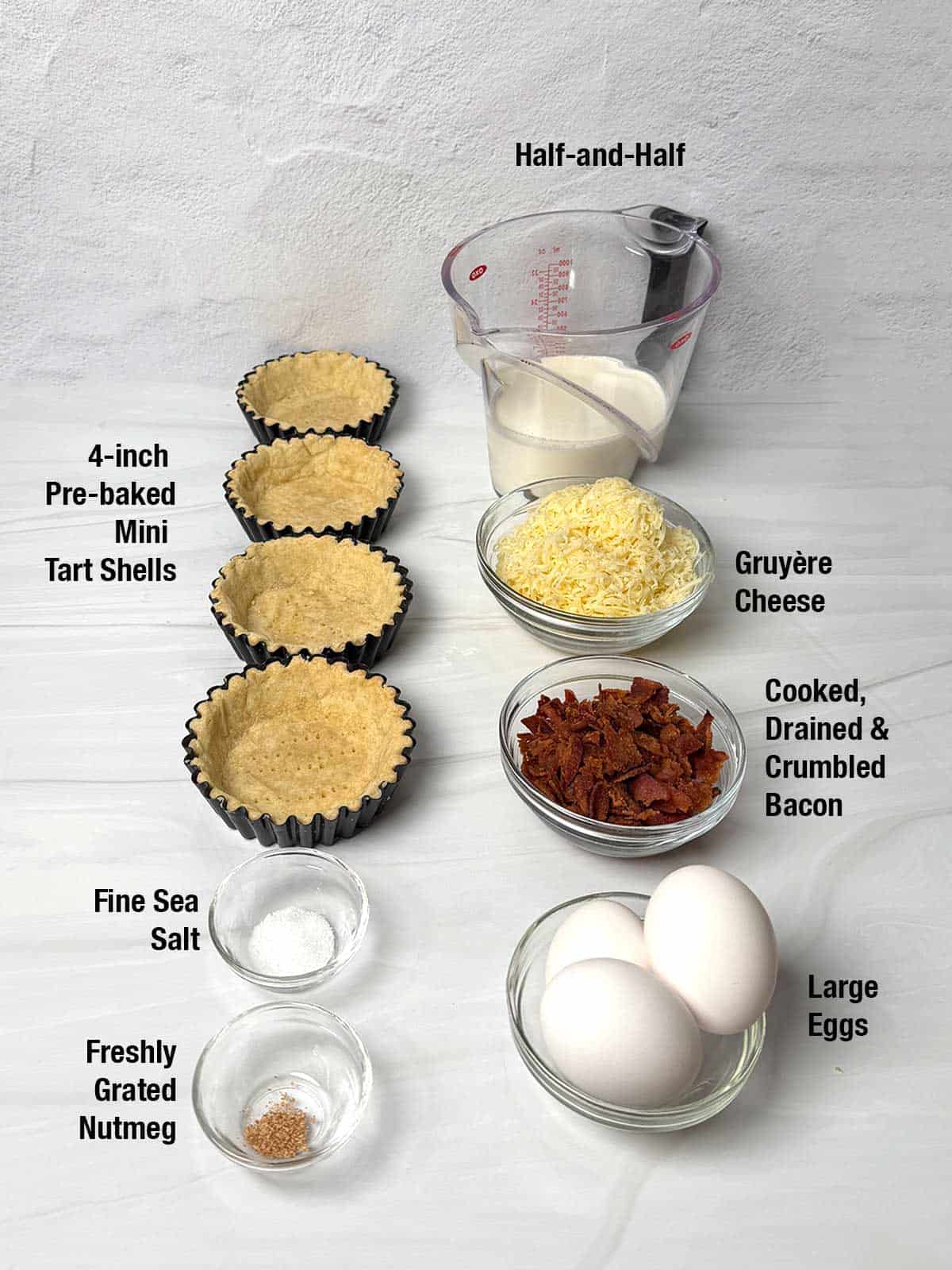
- Mini Tart Shells: The perfect pairing: buttery, flaky crusts made with my Savory French Pastry Dough, prebaked in deep 4-inch mini tart pans.
- The Custard: Half-and-half mixed with eggs, fine sea salt, and nutmeg.
- For Quiche Lorraine: Gruyère cheese and bacon.
Here's How to Make the Mini Quiches
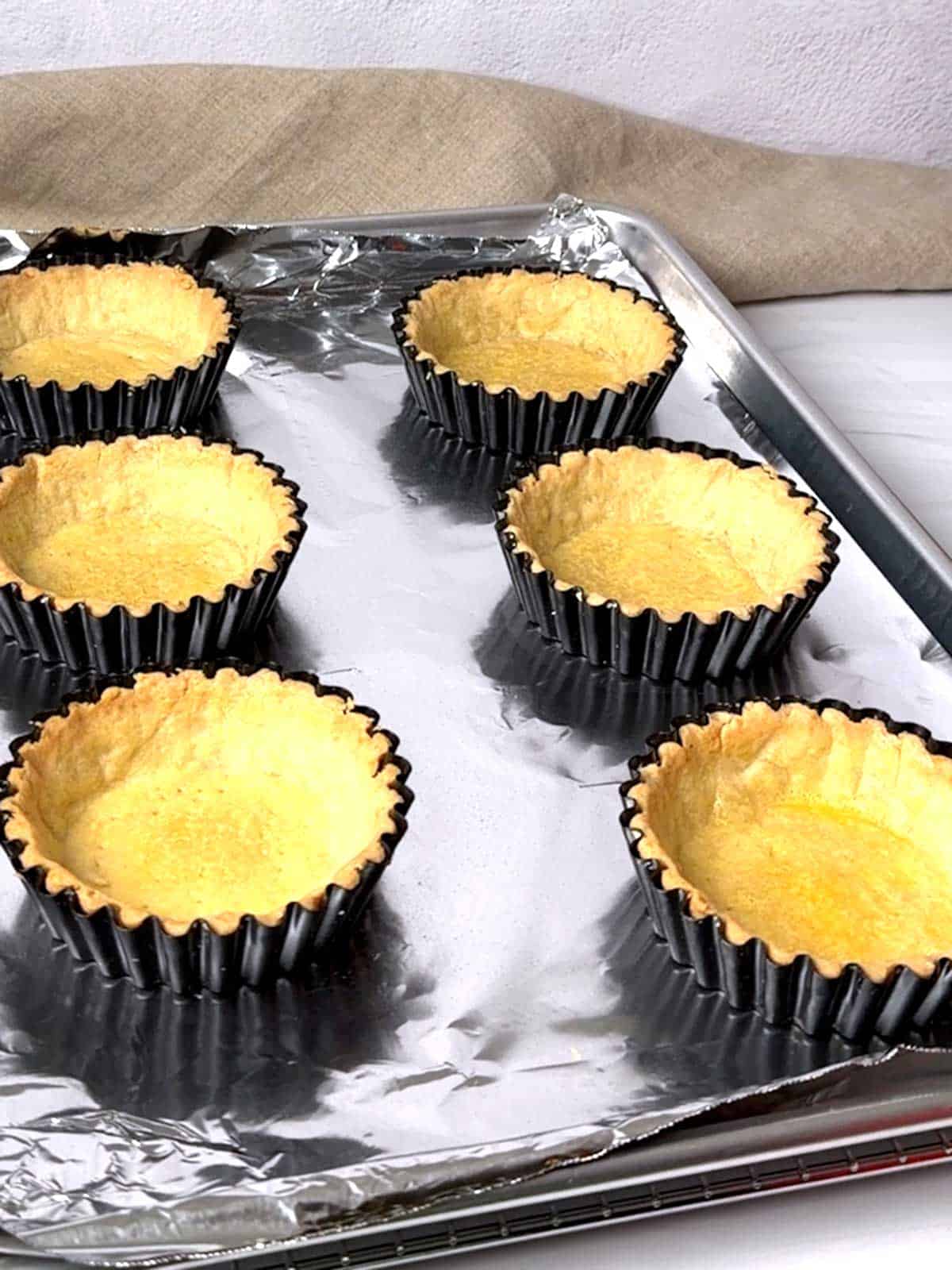
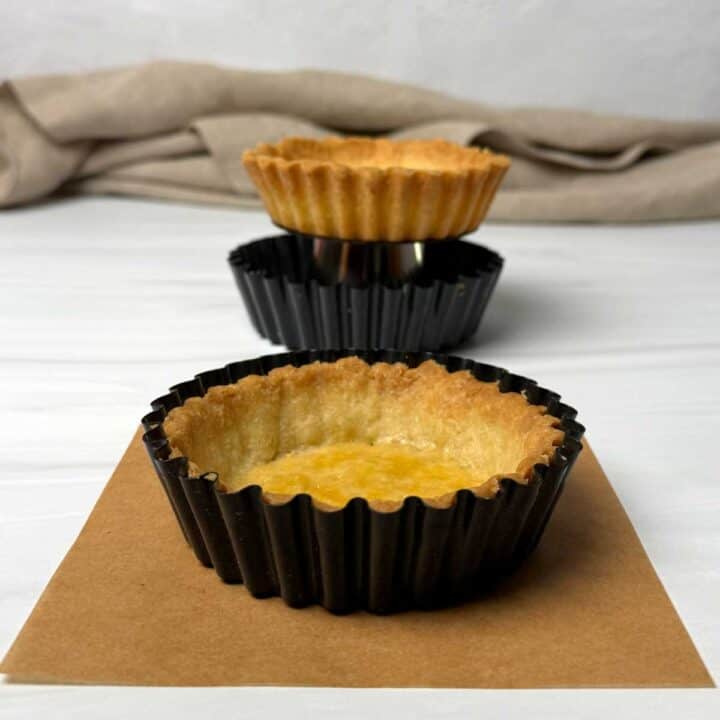
- The Crust: I started by blind-baking the mini tart shells, which I had filled with weights, for 20 minutes. After 20 minutes, I removed the weights, brushed the shells with beaten egg to seal them, and baked them for an additional 5 minutes.
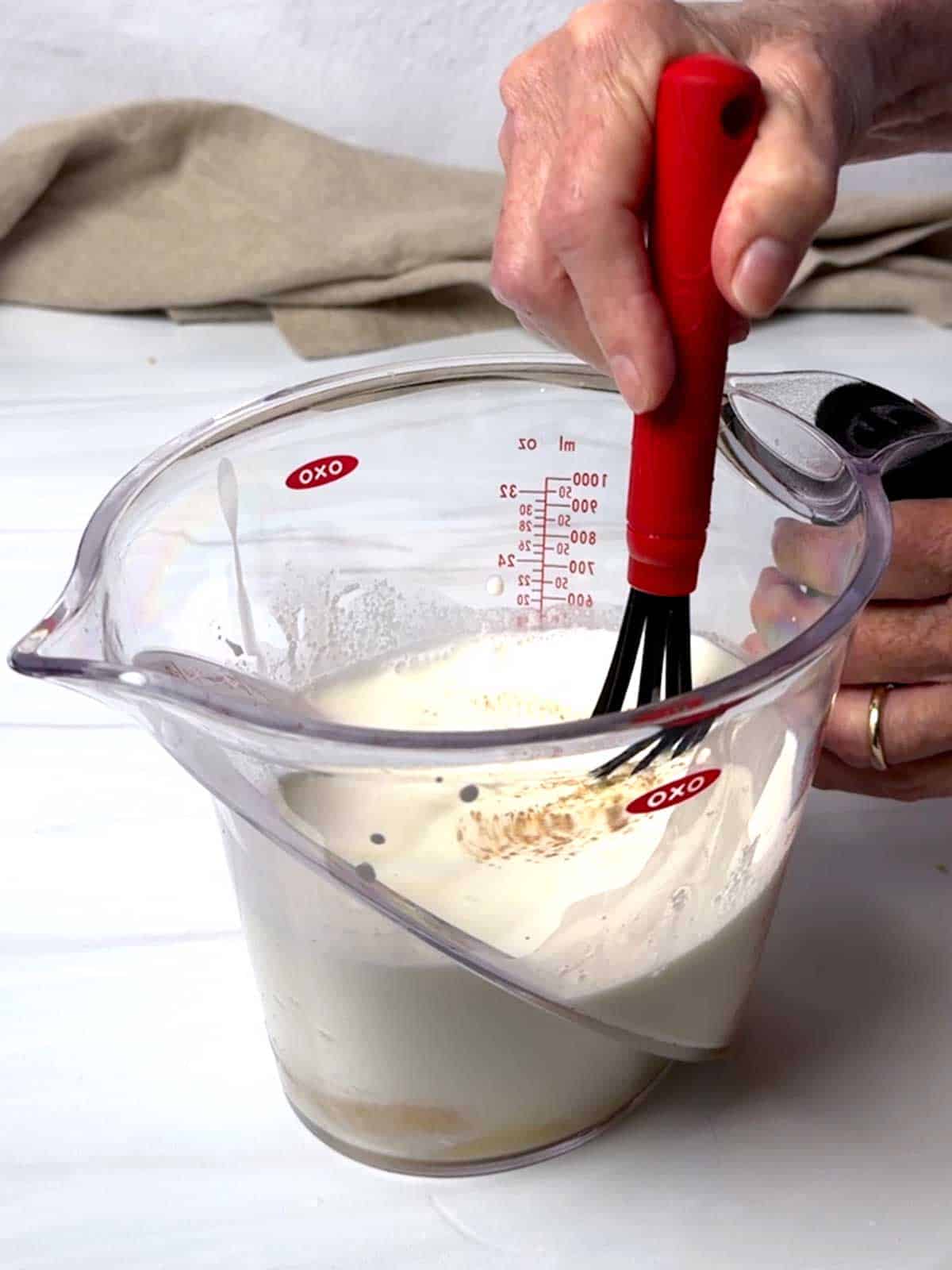
- The Custard: I whisked together the half-and-half, eggs, salt, and nutmeg in a 4-cup measuring cup with a spout. This made it easier to add the custard to the shells.
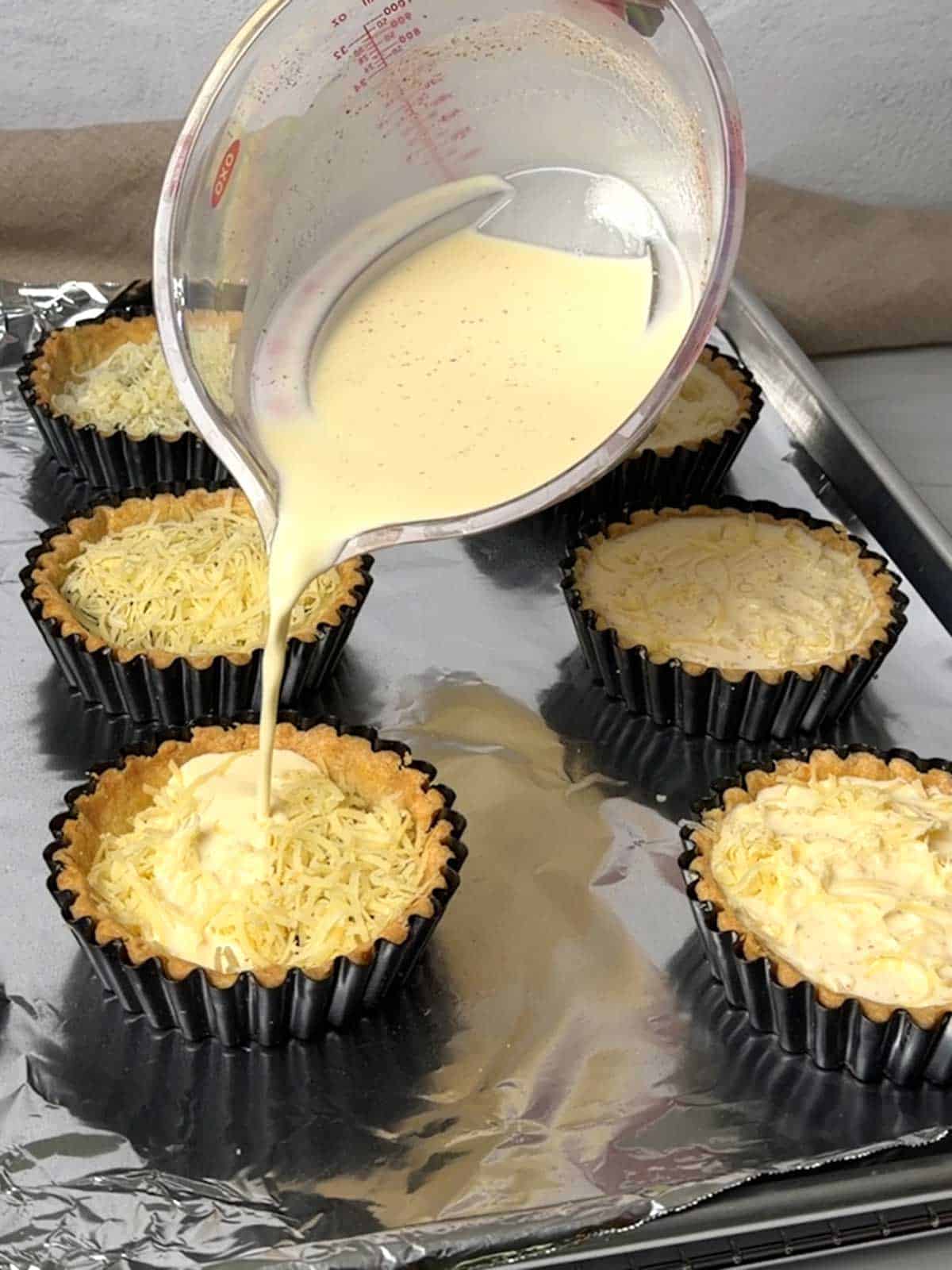
- Building the Quiche: I started by adding 2 tablespoons of cooked, crumbled bacon to each mini tart shell. Then, I added 0.5 ounces (2 tablespoons) of finely shredded Gruyère, followed by 2 ½ to 3 ounces of the custard. I was careful not to overfill the shell with the filling.
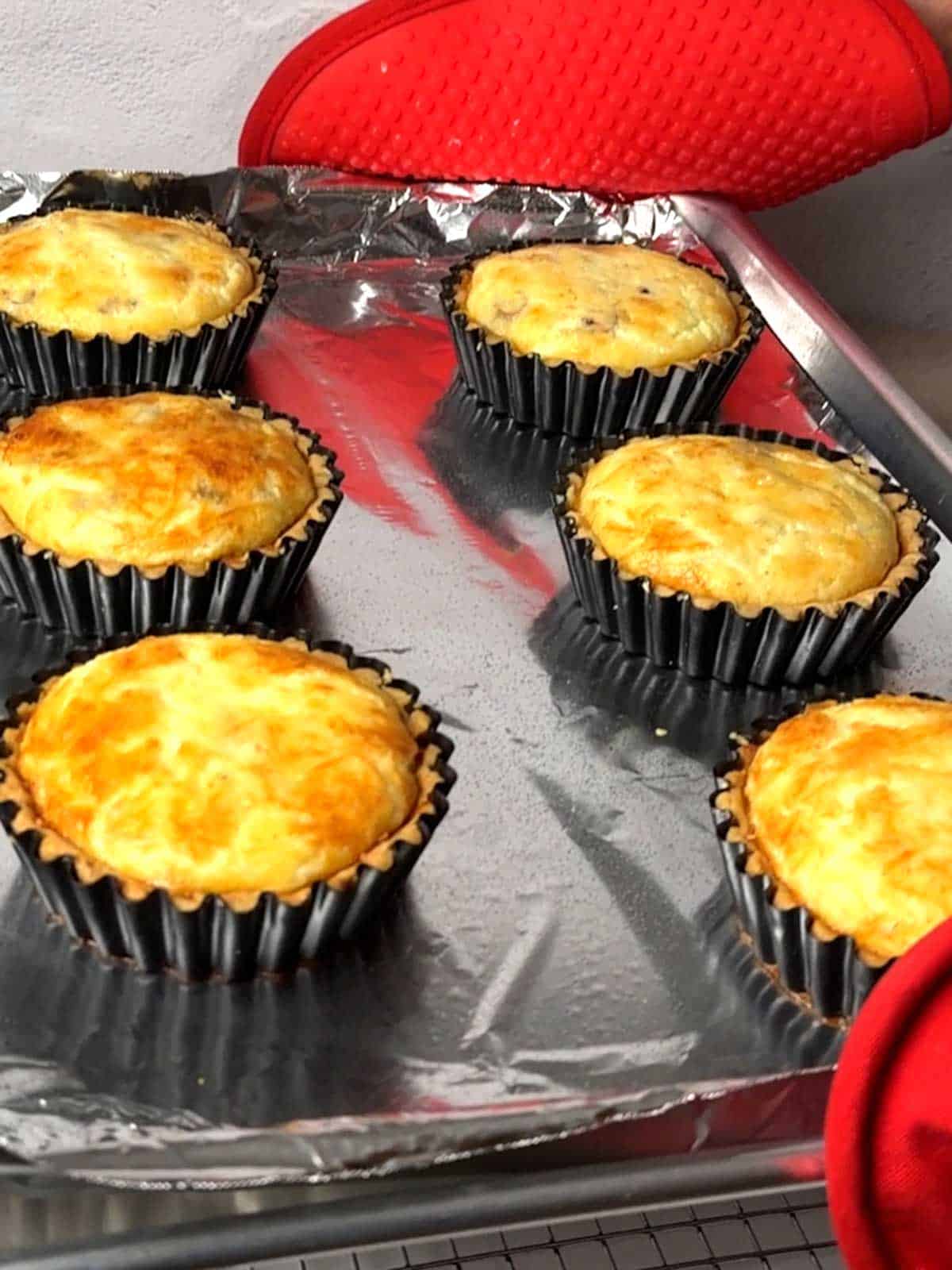
- Bake: I baked the mini quiches in a 350°F oven for about 30 minutes, until the custard was set and the tops were lightly golden.
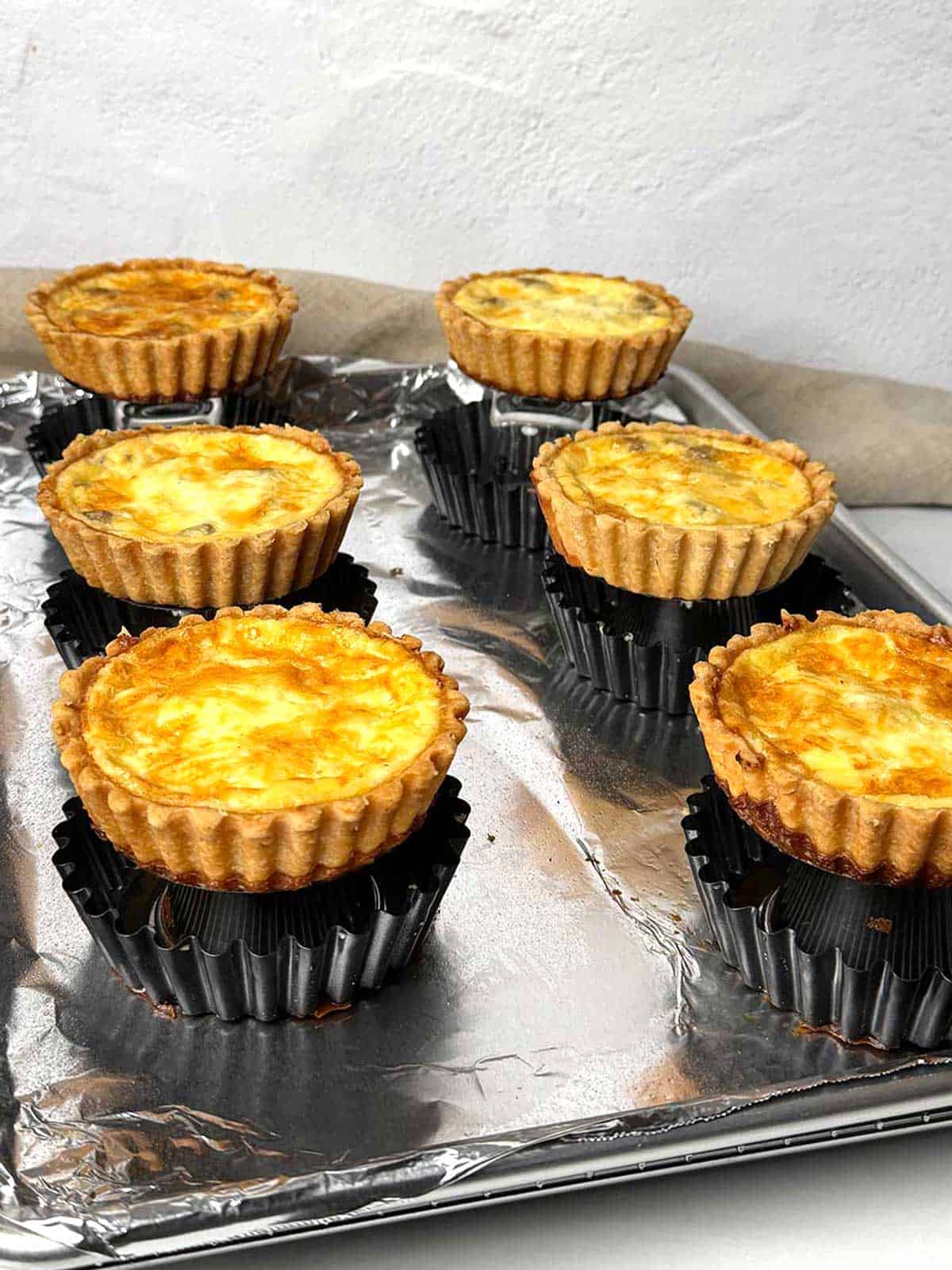
- Cool: I allowed the mini quiches to cool for about 10 minutes before serving. I like to place them on a small inverted shot glass or condiment cup so the tart pan can fall away.
Sometimes, the best recipes come from solving a problem. What started as a search for a better mini quiche eventually became one of my favorite make-ahead meals.
Now I keep both prepared tart shells and baked mini quiches in the freezer. Whether it's breakfast, brunch, lunch, or a quick weeknight dinner, homemade quiche is never far away. If you're anything like the Master Test Tester, don't be surprised if these become a regular request in your house too. Yum!
PudgeFactor Test Kitchen
During development, I learned far more than I expected.
- Deep mini tart pans matter: I could never bring myself to try the mini quiches before because the mini tart pans I could find were just too shallow (¾-inch). When I found the deep mini tart pans (1.2 inches), I knew they would work before I even started. The additional depth creates a proper balance between crust and custard and significantly minimizes the potential of the custard overflowing.
- No on using store-bought pie crust: I developed and tested this recipe using my Homemade Savory Pastry Dough. I didn't try the recipe using store-bought pie crust. However, based on my previous experience with store-bought pie crust, I would expect uneven tart shells due to shrinkage and slippage. With a food processor, the homemade pastry takes less than a minute to put together, and the time spent rolling the dough and fitting the mini tart pans is likely no more than if a store-bought pie crust were used.
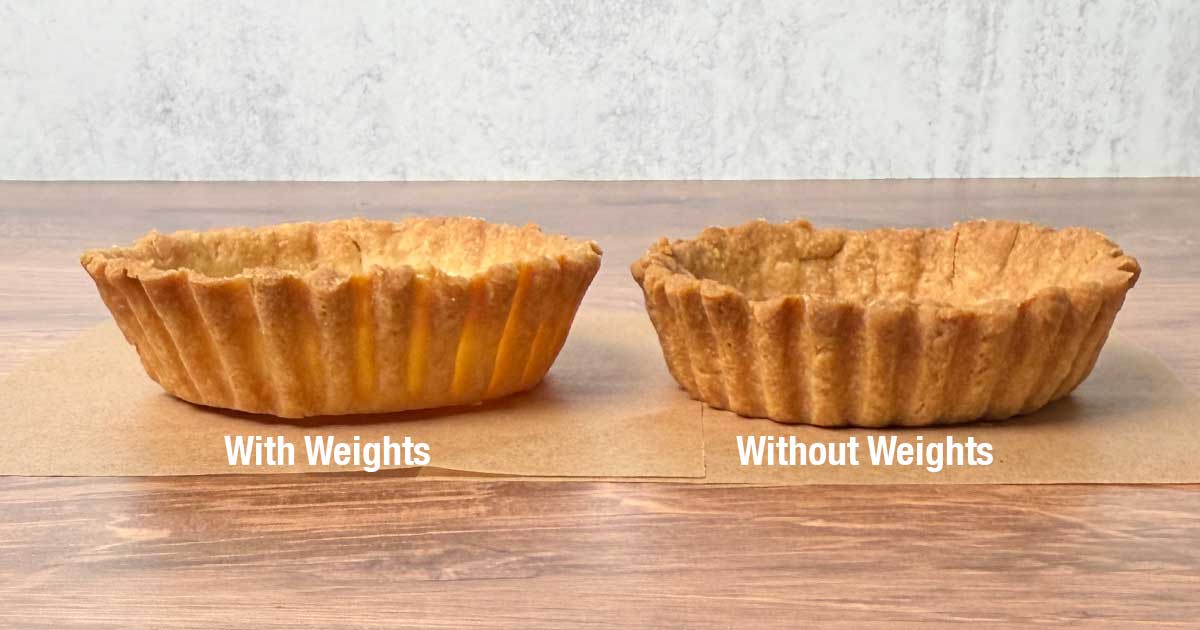
- Blind baking is worth the extra step: With blind baking, the crust stays crisp after filling. Because of the dough formulation and the slight slope of the sides of the tart pans, I found only a minimal difference between using and not using weights. My preference, however, is to use the weights.
- Freeze first: In my opinion, freezing the pastry shells before baking is nonnegotiable. One reason pastry can fail is that the fats melt faster than the structure sets. Freezing minimizes this effect.
- Egg seal: In my first test of making these mini quiches, I found that some of the custard leaked during cooking. To solve this, I brushed the mini tart shells with beaten egg during the last five minutes of cooking.
- Freeze the baked quiches: Freezing them was perhaps my biggest surprise. I found that after freezing and reheating several batches of the mini quiches, neither the Master Taste Tester nor I could detect any loss of flavor or texture. Now, I have ready-made meals in the freezer just waiting to be reheated at 375°F for 15 minutes.
- Master Taste Tester observation: After eating these mini quiches several nights in a row, my husband commented: "These are actually better than a slice cut from a larger quiche." I couldn't agree more. Every mini quiche has the perfect amount of flaky crust, creamy custard, cheese, and filling.
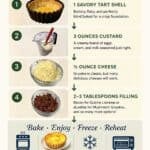
The PudgeFactor Mini Quiche Formula
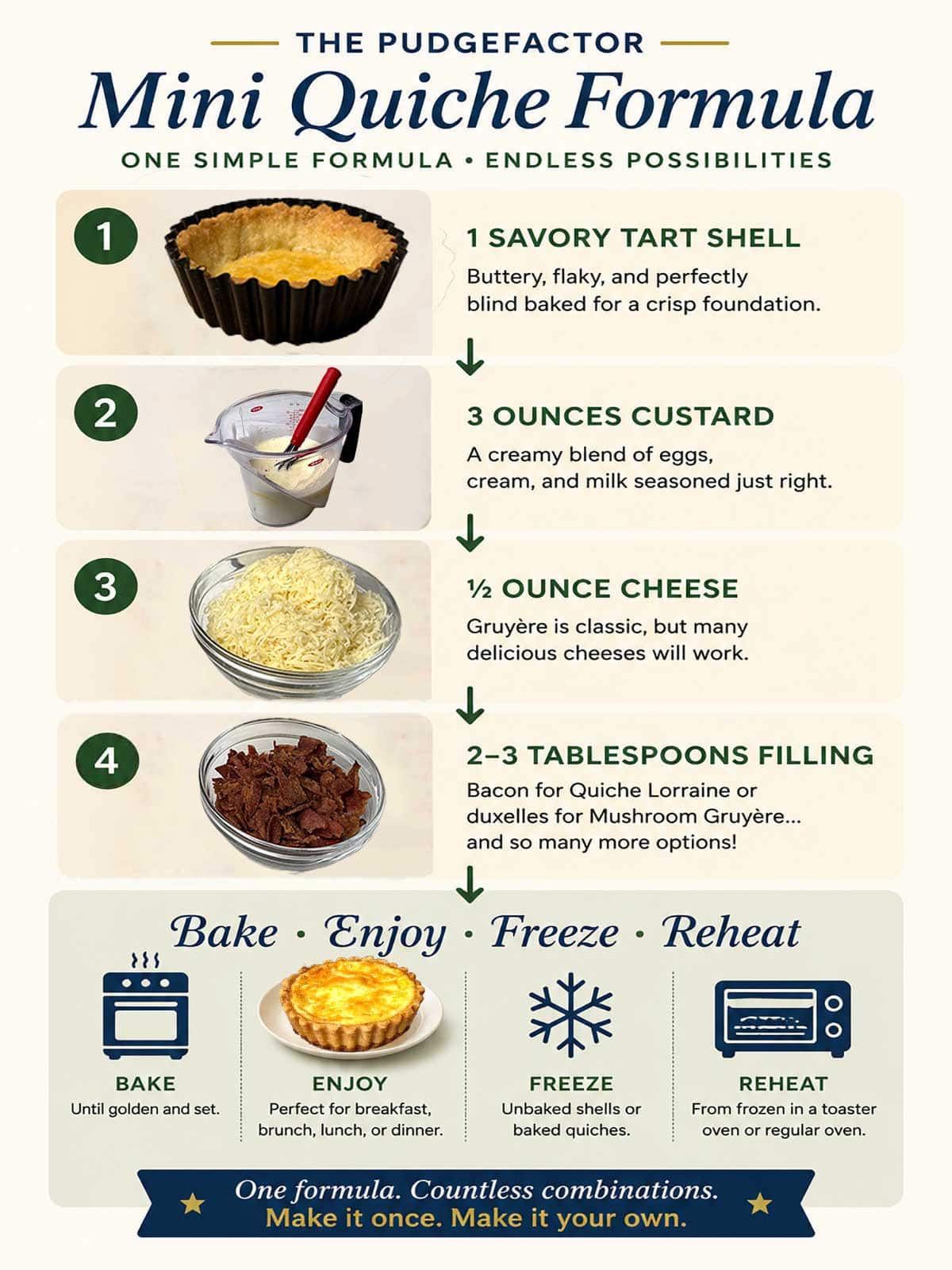
One thing that I realized in the process of making these mini quiches was that it's really a four-step process as shown in this infographic!
Endless Variations
Once the basic formula is mastered, the possibilities are almost endless.
For the filling, use 2 to 3 tablespoons of bacon, duxelles, ham, spinach, roasted red peppers, caramelized onions, broccoli, asparagus, etc.
For the cheese, swap 0.5 ounces of Gruyère for Swiss, Cheddar, Fontina, Gouda, etc.
You're only limited by your taste preferences and your imagination.
Make-Ahead Strategy
One of the biggest discoveries during testing was just how freezer-friendly these quiches are. This opens up two different strategies.
- Option 1: Freeze the lined, unbaked tart shells, and bake frozen directly from the freezer whenever you want fresh quiche.
- Option 2: Once they are cool, freeze the baked quiches and reheat directly from frozen in a toaster oven or conventional oven.
Full-Size Quiche
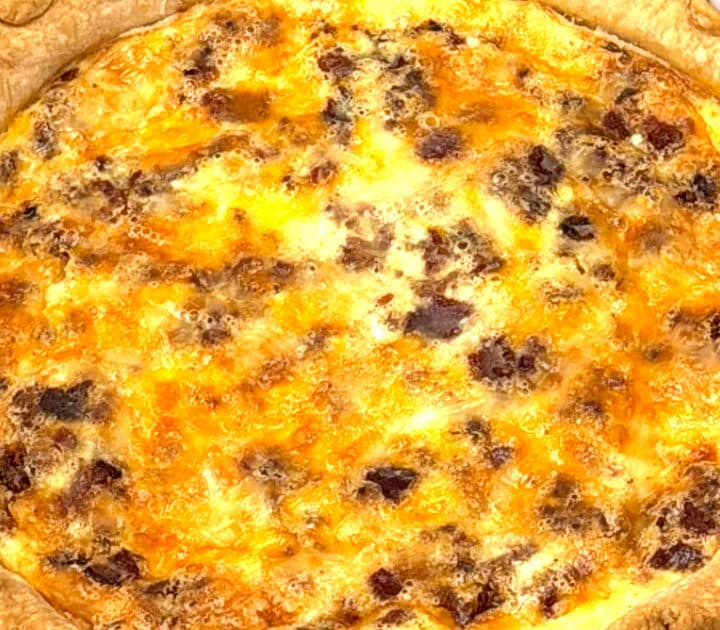
Prefer a full-size quiche? Check out these alternatives:
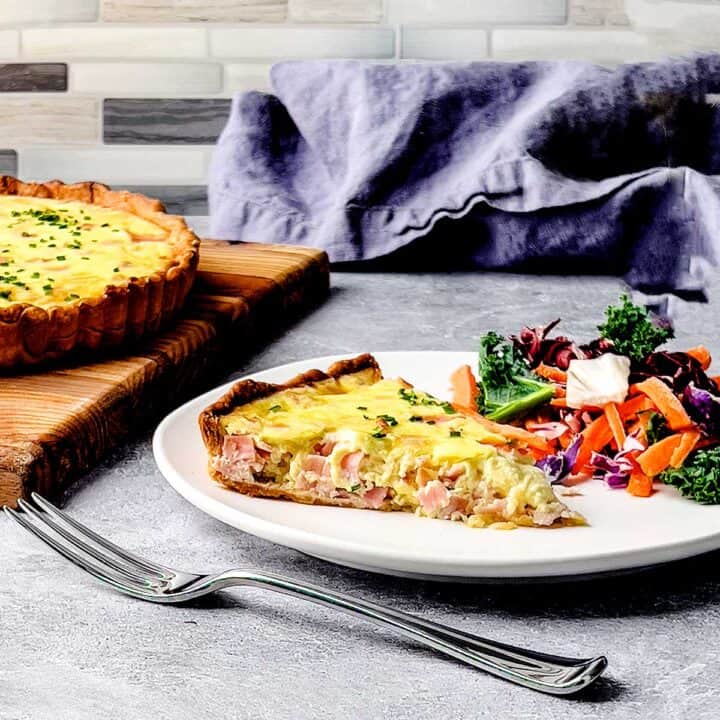
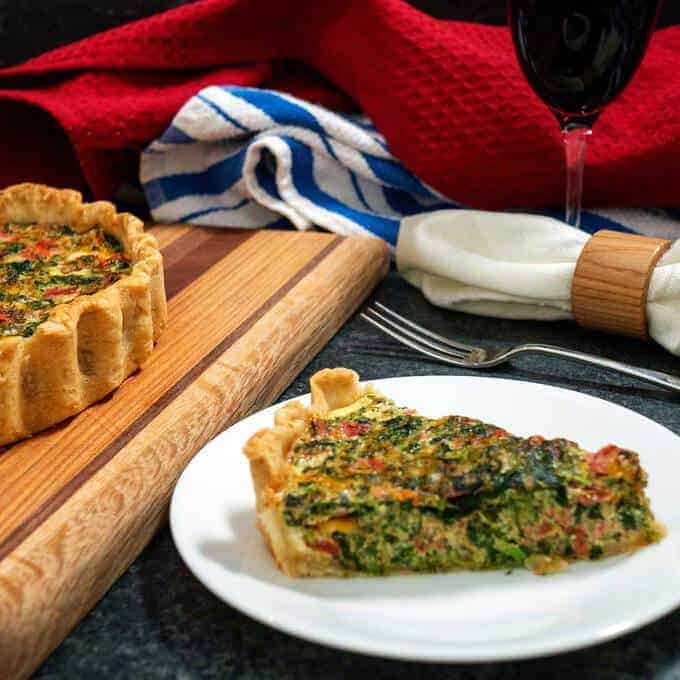
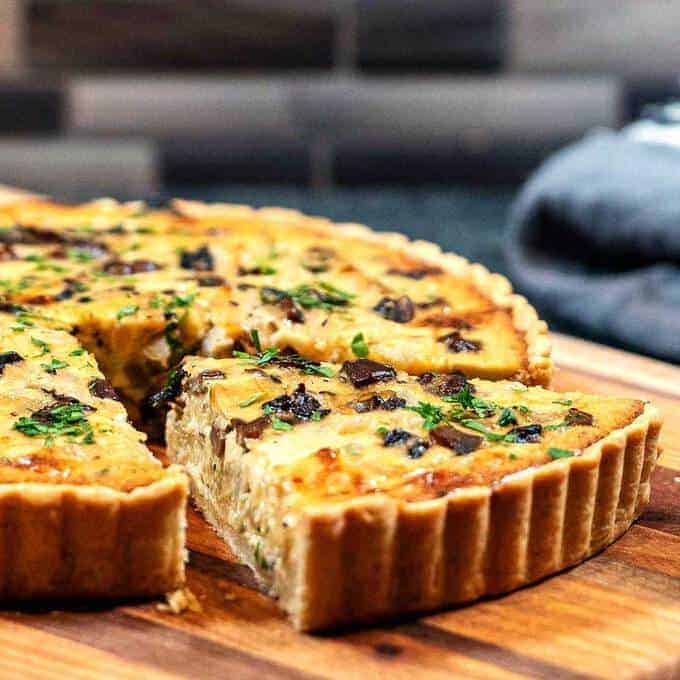
Did you make this recipe? We'd love to know how it turned out! Leave a review below. Then, share a picture on Instagram and tag @pudgefactor so we can see it.
Don't forget to follow us on Pinterest, Facebook, YouTube, Flipboard, and Instagram.
Thank you so much for visiting PudgeFactor. We hope you'll come back!
Recipe
Want to Save This Recipe?
Enter your email & I'll send it to your inbox. Plus, enjoy weekly doses of culinary inspiration as a bonus!
By submitting this form, you consent to receive emails from Pudge Factor.
Mini Quiche Lorraine
Equipment
- 6 Mini 4-inch deep tart shells (See Tip 1)
- whisk
- 4-cup measuring cup
Ingredients
- 1½ cups (12 ounces, 355 ml) half-and-half (See Tip 2)
- 3 large eggs
- ½ teaspoon fine sea salt
- Dash of freshly grated nutmeg
- ½ cup (1.6 ounces, 45 grams, 8 pieces) bacon, cooked, drained, and crumbled (See Tip 3)
- ¾ cup (3 ounces, 85 grams) shredded Gruyère cheese (See Tip 4)
- 6 mini tart shells, pre-baked
Instructions
- Preheat the oven to 350°F.
- Whisk together the half-and-half, eggs, salt, and nutmeg. (See Tip 5)
- Sprinkle 2 tablespoons of the bacon into the bottoms of each mini tart shell.
- Sprinkle 0.5 ounces of the shredded Gruyère into each mini tart shell.
- Pour around 2½ to 3 ounces of custard into each tart shell. (See Tip 6)
- Bake in a preheated 350°F oven for around 25 to 30 minutes or until the filling is just set and lightly golden.
- Let the mini tarts cool for 10 minutes before removing them from the tart pans.
- Yield: 6 mini Quiche Lorraine Tarts
Video
Tips/Notes
- These mini tart pans were perfect for 2 reasons. First, they are deeper (1.2 inches) than the traditional mini tart pan (0.75 inches). This extra depth was critical in achieving the results. Second, the tart pans have slightly sloped sides, which help minimize any shrinkage of the pastry dough during baking.
- May use 1 ½ cups of heavy cream in place of the half-and-half. However, I found that the half-and-half worked well.
- I used pre-cooked bacon (regular, not thick cut), which I crisped in the microwave - one minute per 4 pieces of bacon on a plate covered in paper towels.
- Becasue of the simplicity of the custard in this recipe, using a quality imported Gruyère produces superior results to domestic Gruyère. I used Le Gruyère® Switzerland. It produced a subtle but distinctive taste.
- I like to use a 4-cup measuring cup here. It makes portioning the custard among the tart shells easy.
- I had enough custard leftover to make one additional quiche. However, I only had four mini tart shells.



Leave a Reply