

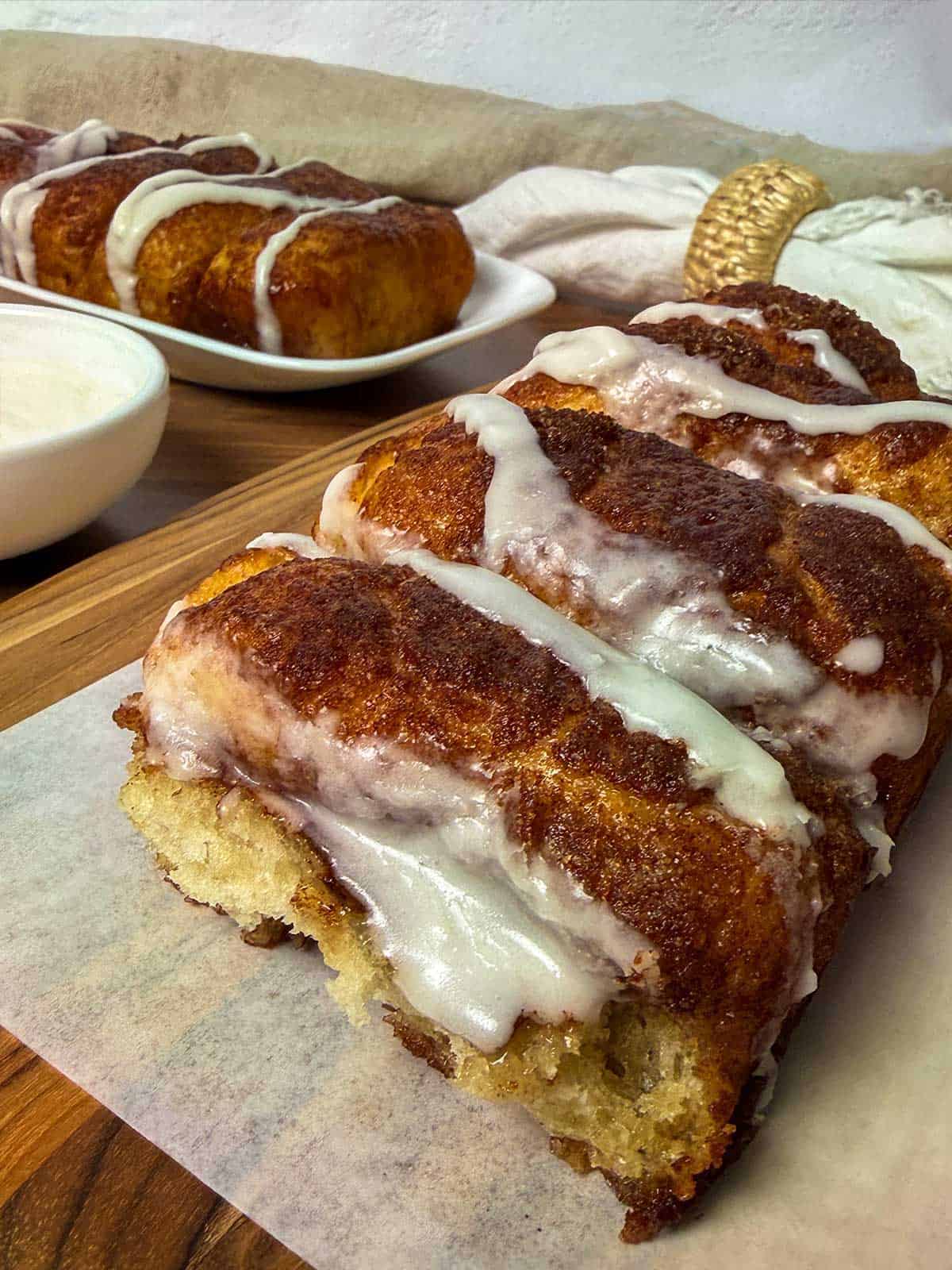
This Dollywood-inspired Cinnamon Bread started with the official recipe but took three test batches to get it right. The final version delivered exactly what I was looking for: tender bread, lots of cinnamon sugar in every bite, and just enough structure to pull apart cleanly.
The official recipe calls for separating the dough into two portions and using 9 x 5-inch loaf pans. It also calls for baking the bread once it has been slashed and coated with the butter-and-cinnamon/sugar mixture after the second rise.
The key to success turned out to be using smaller loaf pans and slashing and coating the dough before the second rise, rather than handling fully proofed dough immediately before baking.
Jump to:
Quick Look at the Recipe
- Convenience: Use a food processor to make the dough
- Difficulty: Easy to moderate
- Makes: Two loaves using 8 x 3 ¾-inch loaf pans
- First rise: About 30 minutes in my oven's proof setting, or until doubled
- Technique: Slash and dip loaves after the first rise
- Second rise: About 45 minutes, or until visibly puffy
- Bake time: About 20 minutes at 350°F
- Serving suggestion: While still warm, drizzle with icing and serve extra icing on the side for dipping
Make the Bread Dough: Step-by-Step
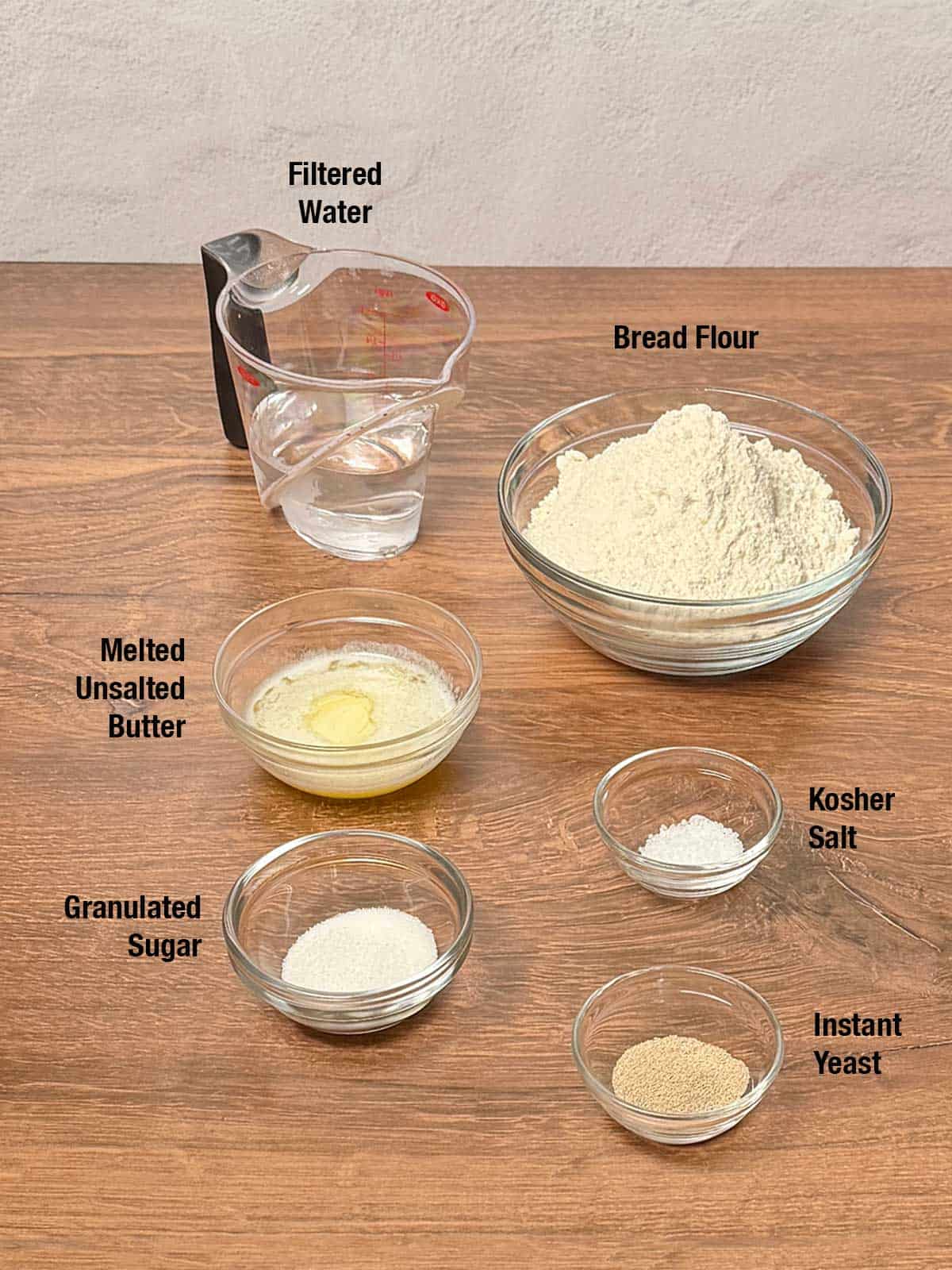
- Ingredients: The bread's ingredients are pretty typical: bread flour, granulated sugar, Kosher salt, instant yeast, filtered water, and melted butter.
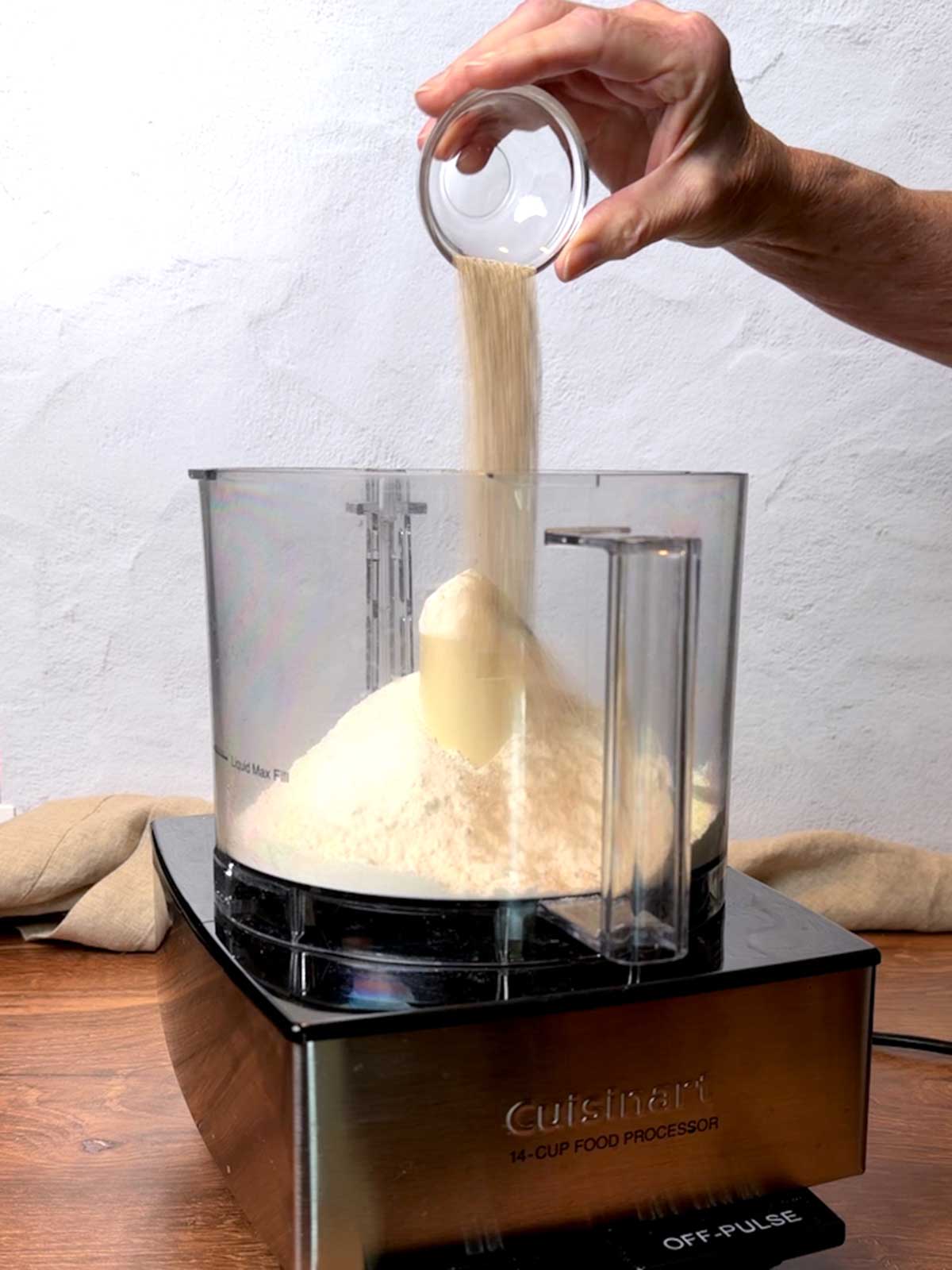
- Dry ingredients: Start by adding the flour, sugar, salt, and yeast to the food processor. Pulse 4 or 5 times to combine the ingredients.
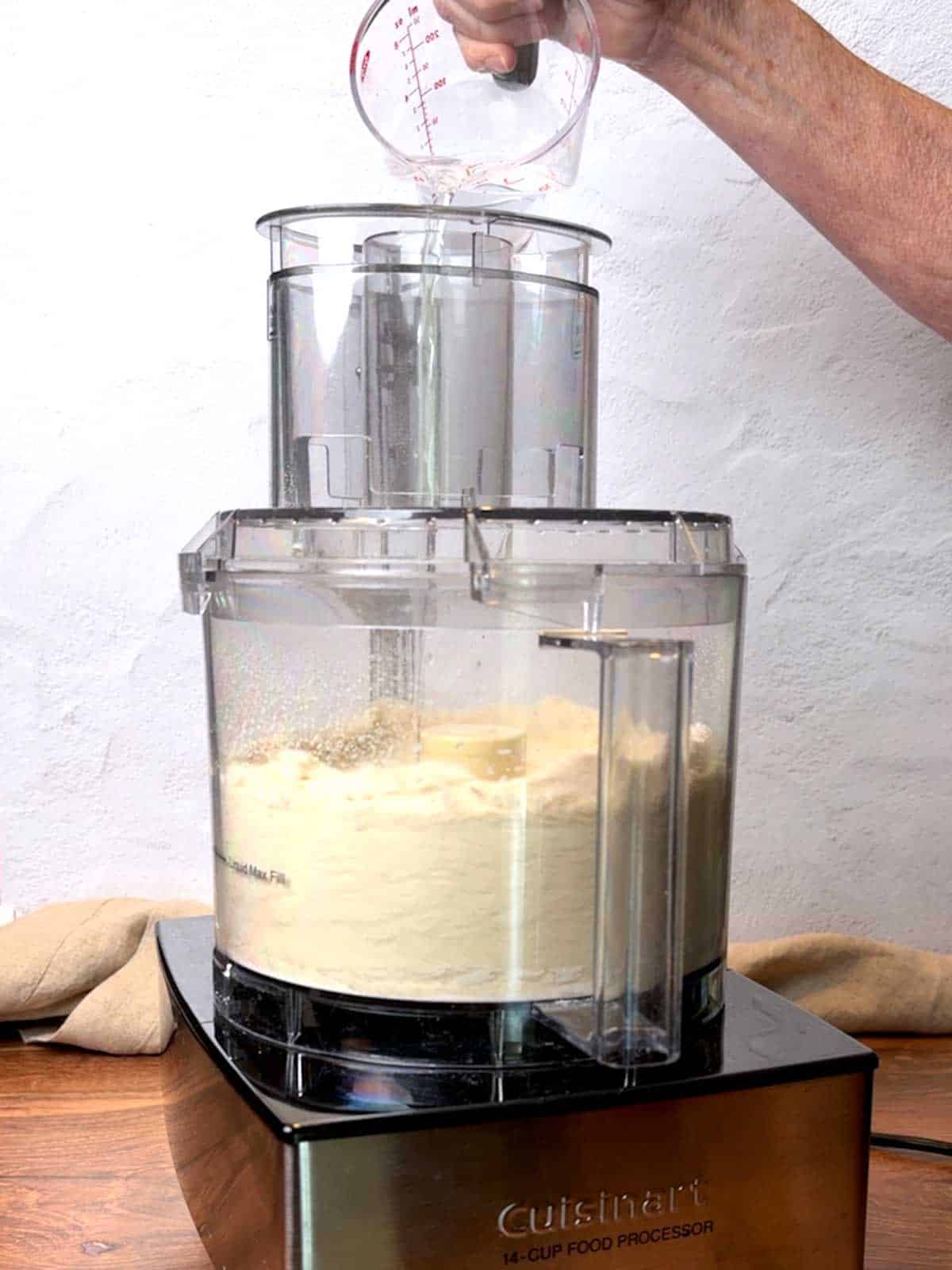
- Water: Remove the feed tube. With the food processor running, slowly add the water through the feed tube; process until the dough is just combined and no dry flour remains, for about 10 seconds. Let the dough rest for 10 minutes.
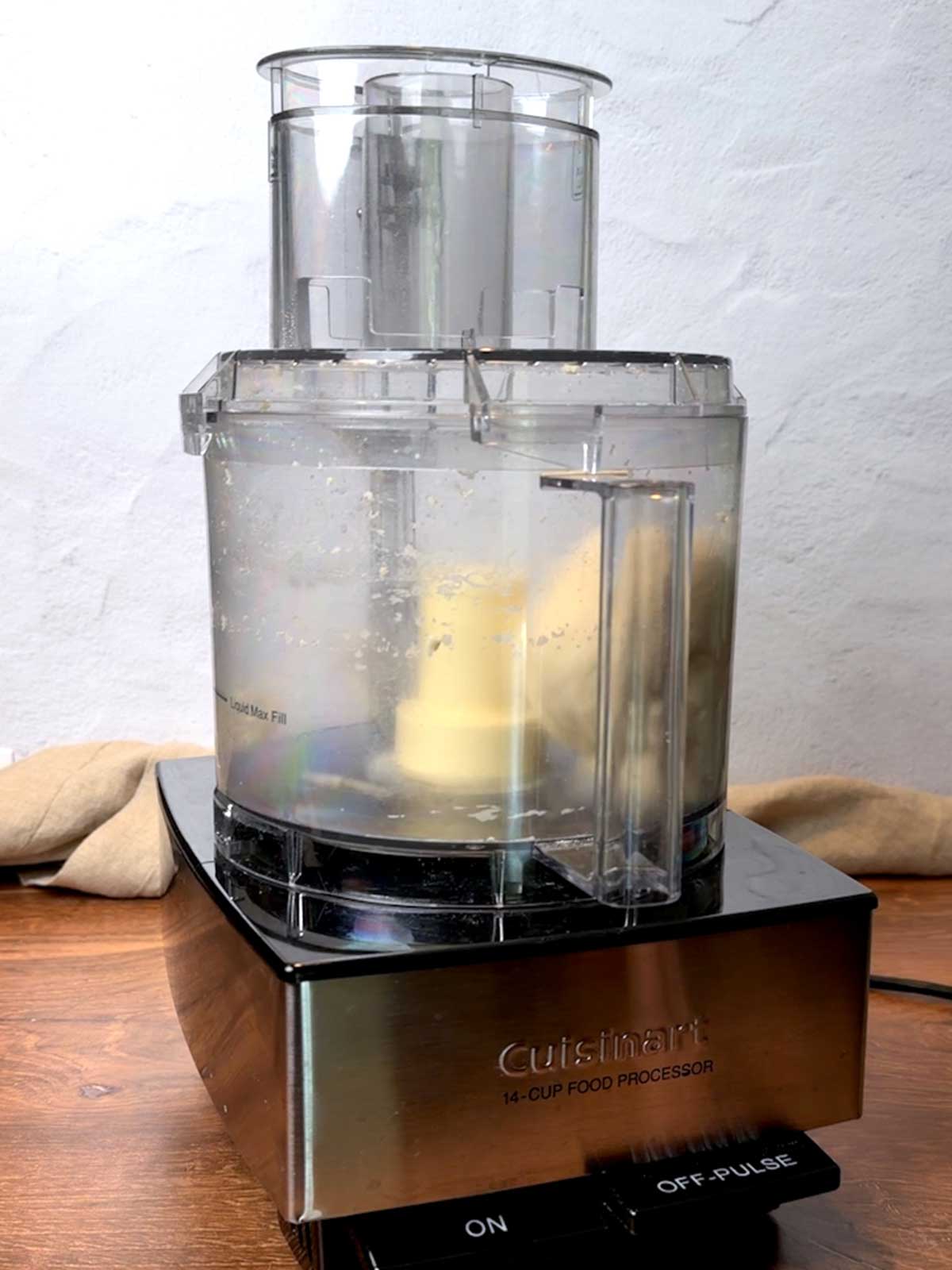
- Melted Butter: After the 10-minute rest, add the butter through the chute with the food processor running. Process until the dough forms a satiny ball that clears the sides of the food processor, about 30 seconds.
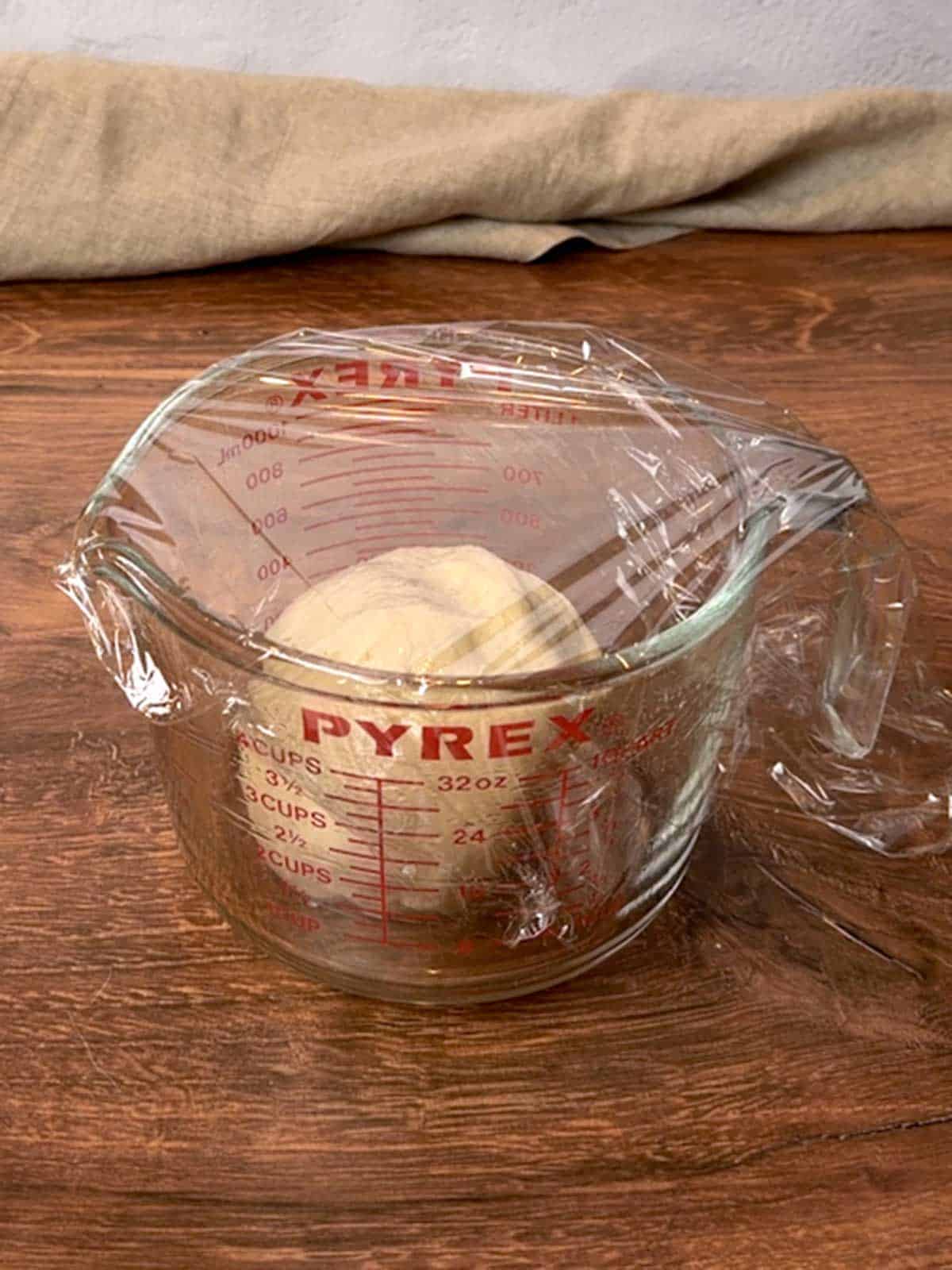
- First rise: Transfer the dough to an oiled bowl. Cover with plastic wrap and place in a warm location until doubled in size, about 30 minutes when using the proof setting on my oven.
Form the Loaves: Step-by-Step
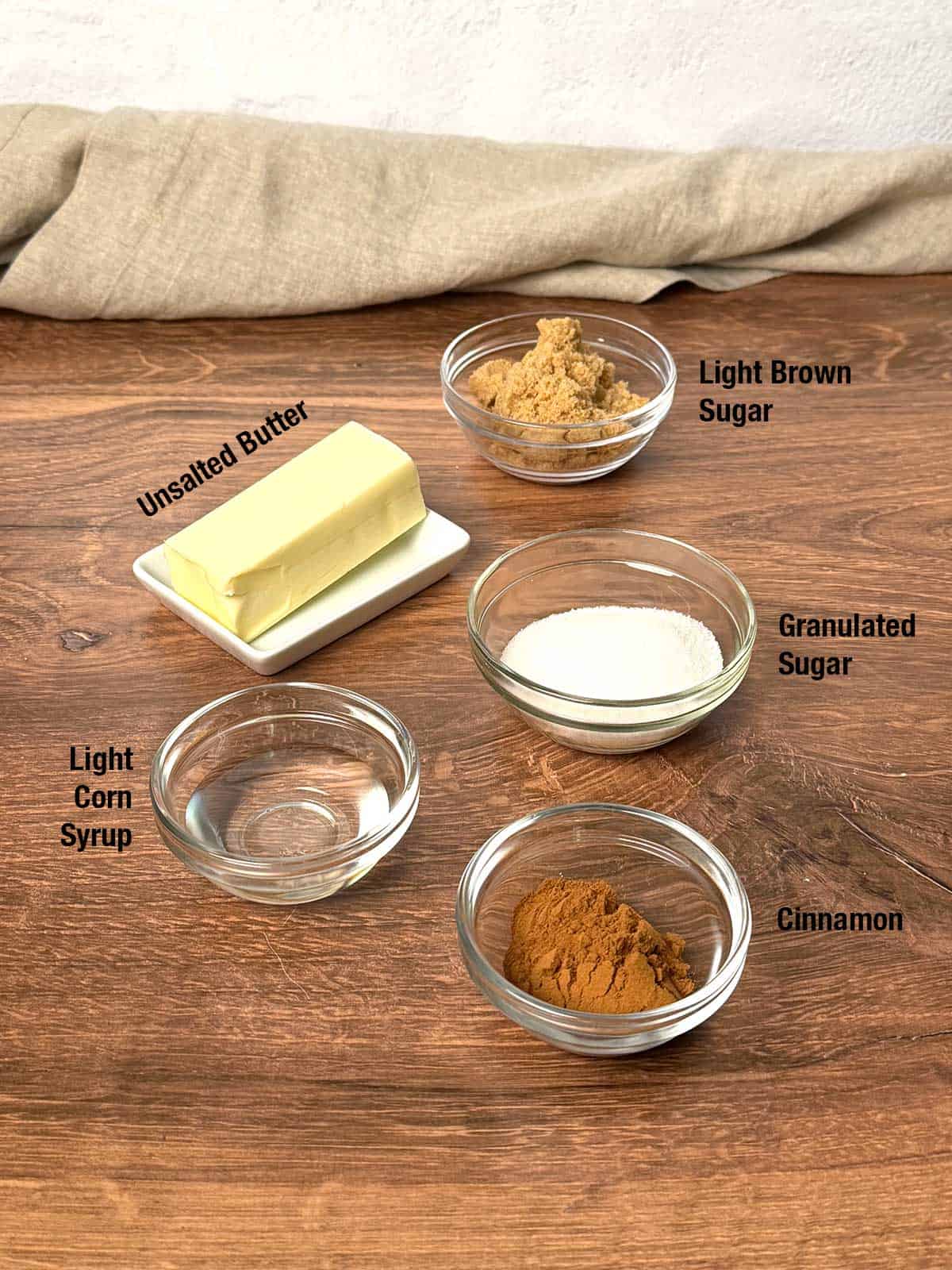
- The coating ingredients: For the butter coating, you need melted butter and light corn syrup. For the cinnamon/sugar coating, you need granulated sugar, brown sugar, and cinnamon.
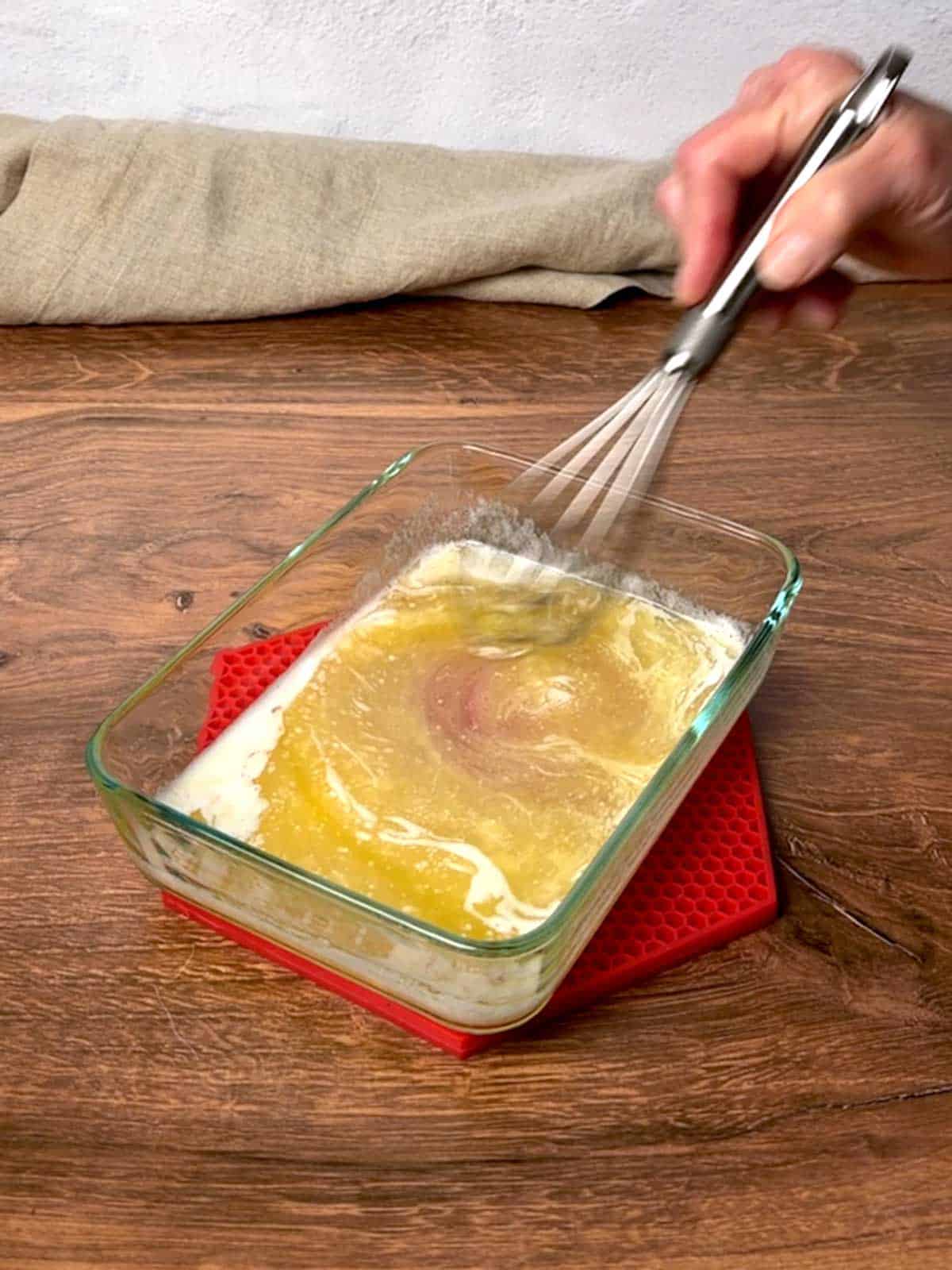
- Butter mixture: Whisk together melted butter and corn syrup in a 6-inch or larger dish.
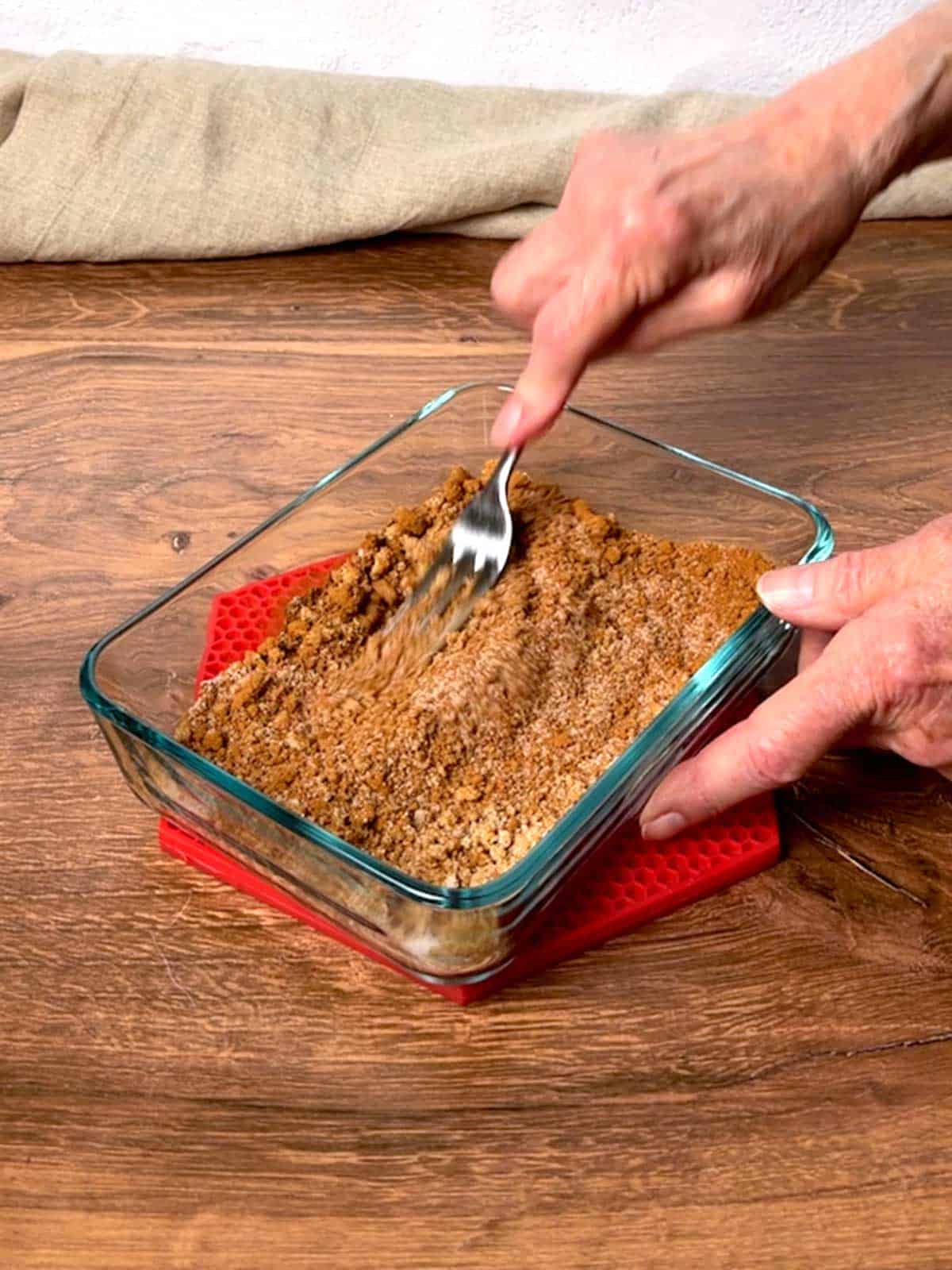
- Cinnamon-Sugar mixture: Combine the granulated sugar, brown sugar, and cinnamon in another 6-inch or larger dish.
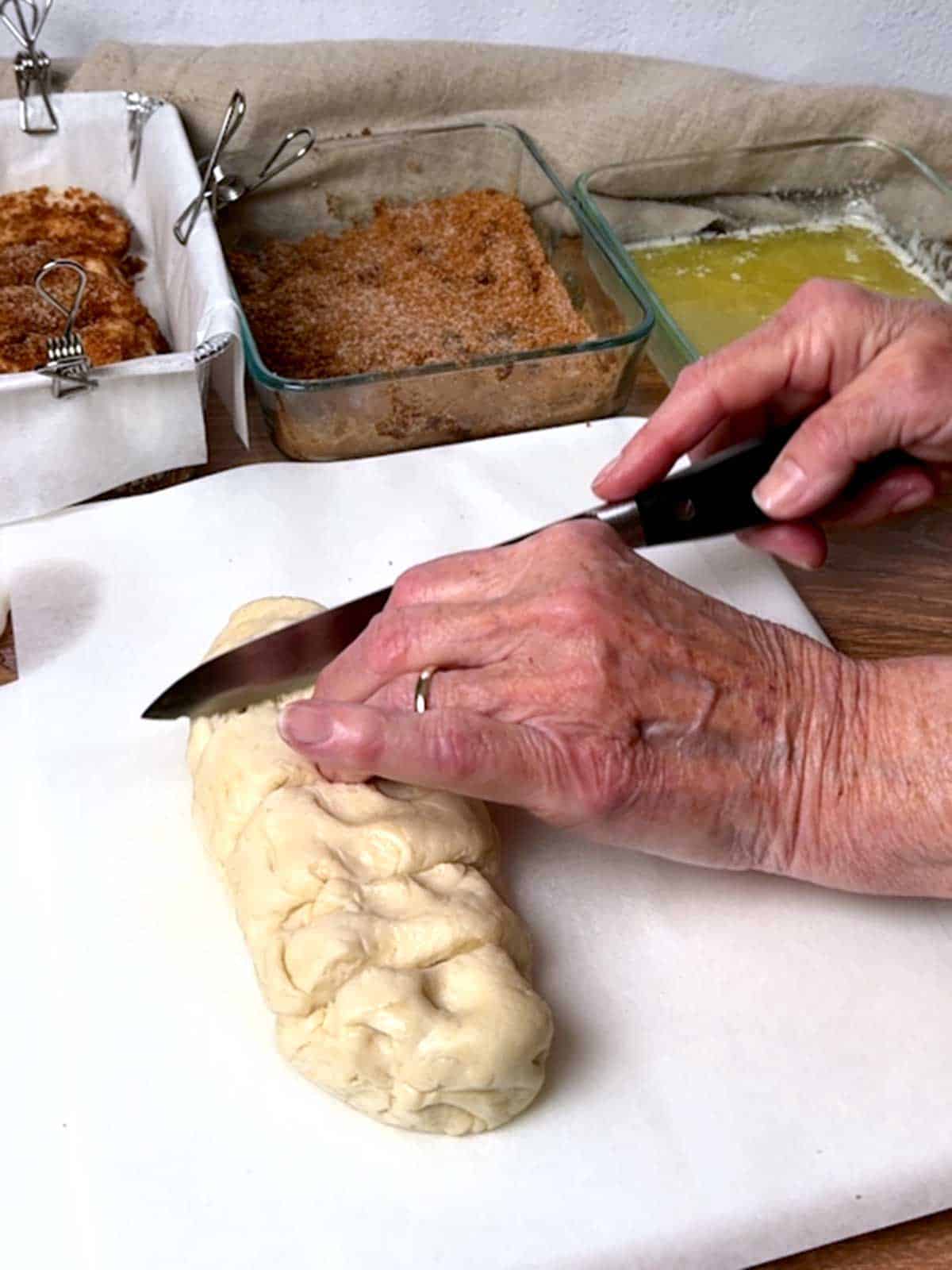
- Form the loaves: After the first rise, transfer the dough to a parchment-lined surface and cut it in half. My dough weighed 13 ounces, so each portion weighed 6.5 ounces. Form each piece into a 6 x 3-inch rectangle and make four deep crosswise cuts, making sure not to cut all the way through.
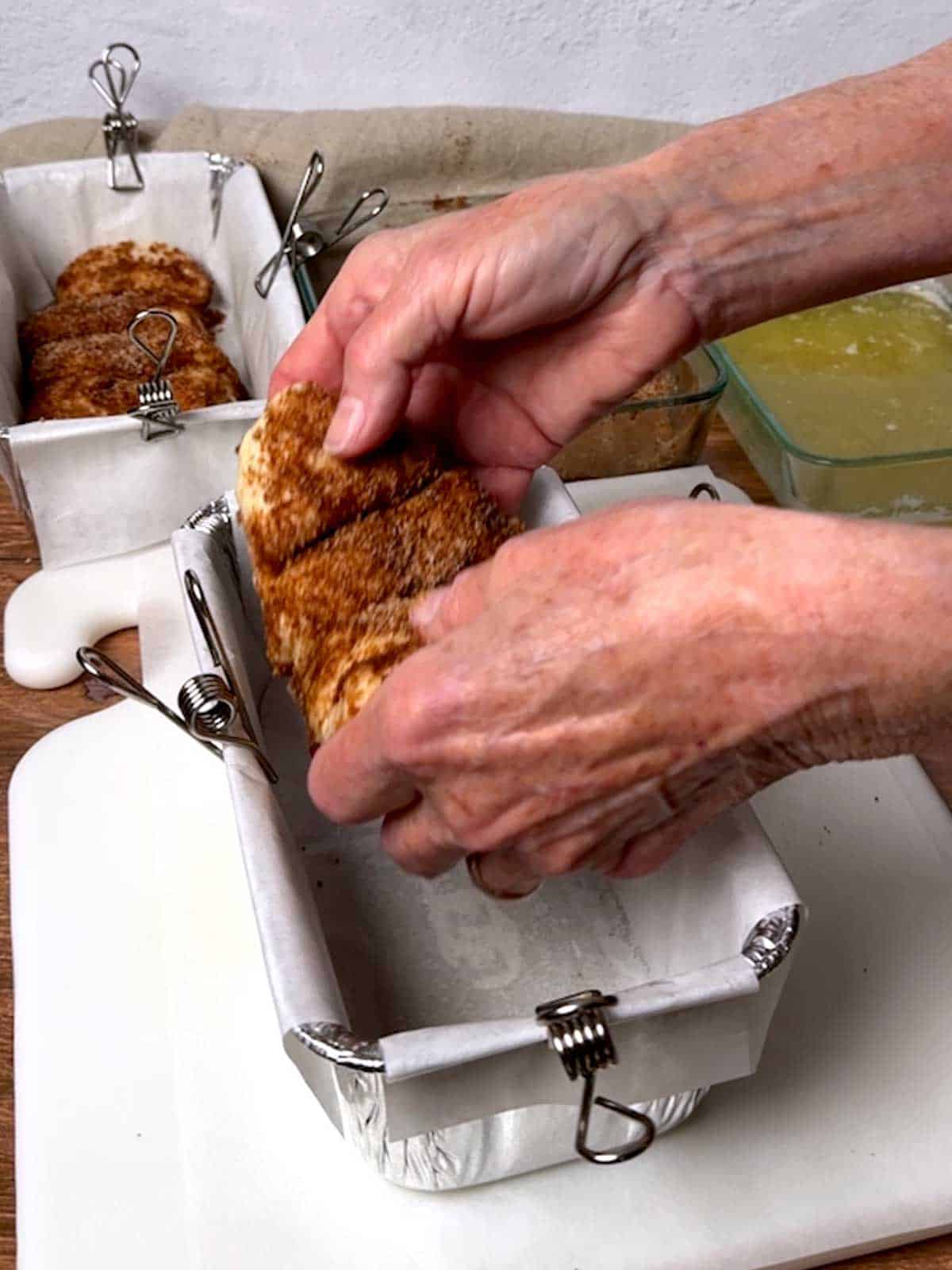
- Dip the loaves: Dip both sides of the dough into the butter mixture. Then, coat all sides and the cut areas generously with the cinnamon/sugar mixture. Add the remaining cinnamon-sugar mixture and butter mixture to each loaf. Place each coated piece into a parchment-lined 8 x ¾-inch loaf pan.
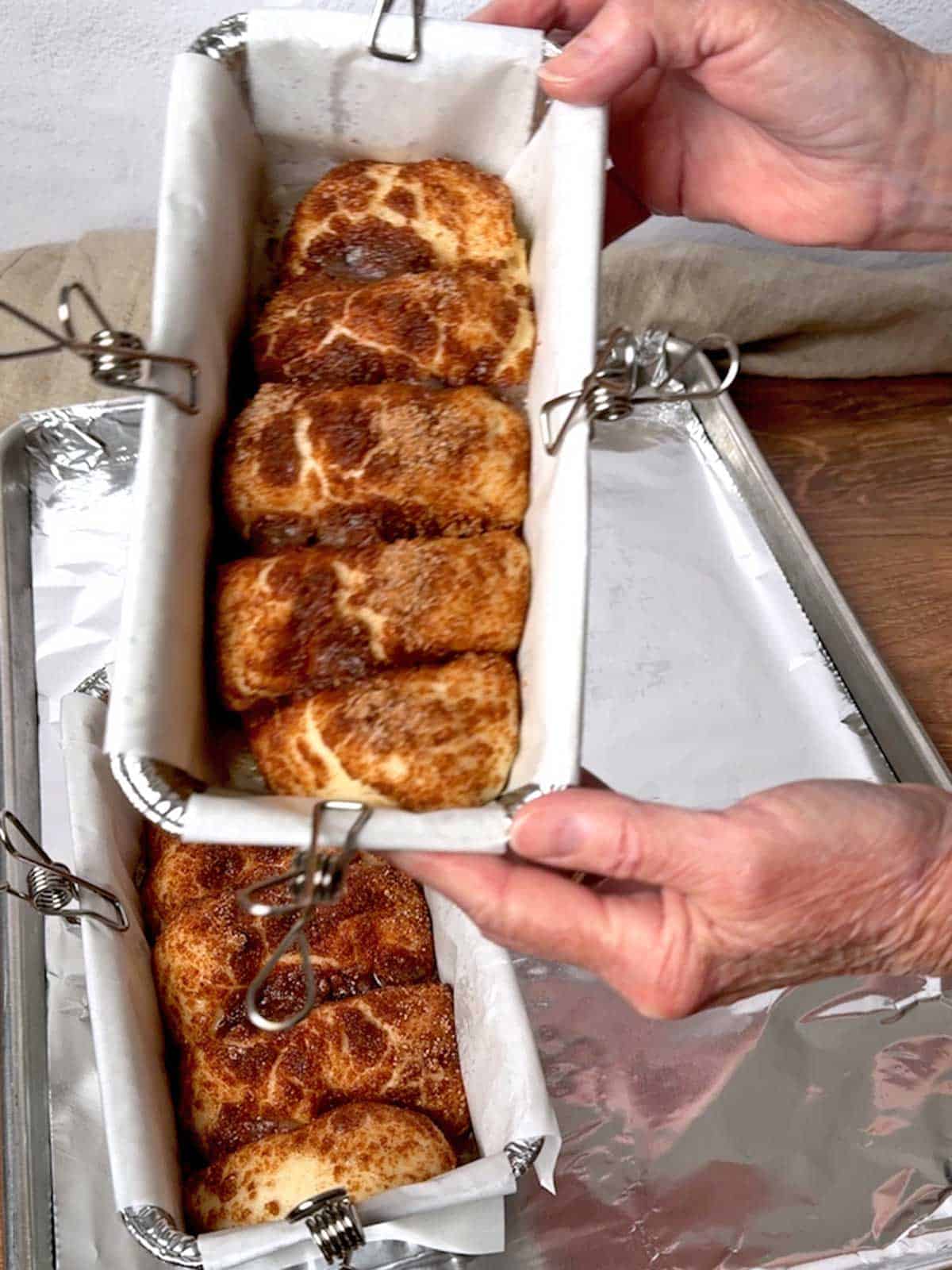
- Second rise: Cover and place in a warm location until the dough fills out the pans and is visibly puffy. This took 45 minutes in my oven's proof setting.
Bake and Ice the Loaves
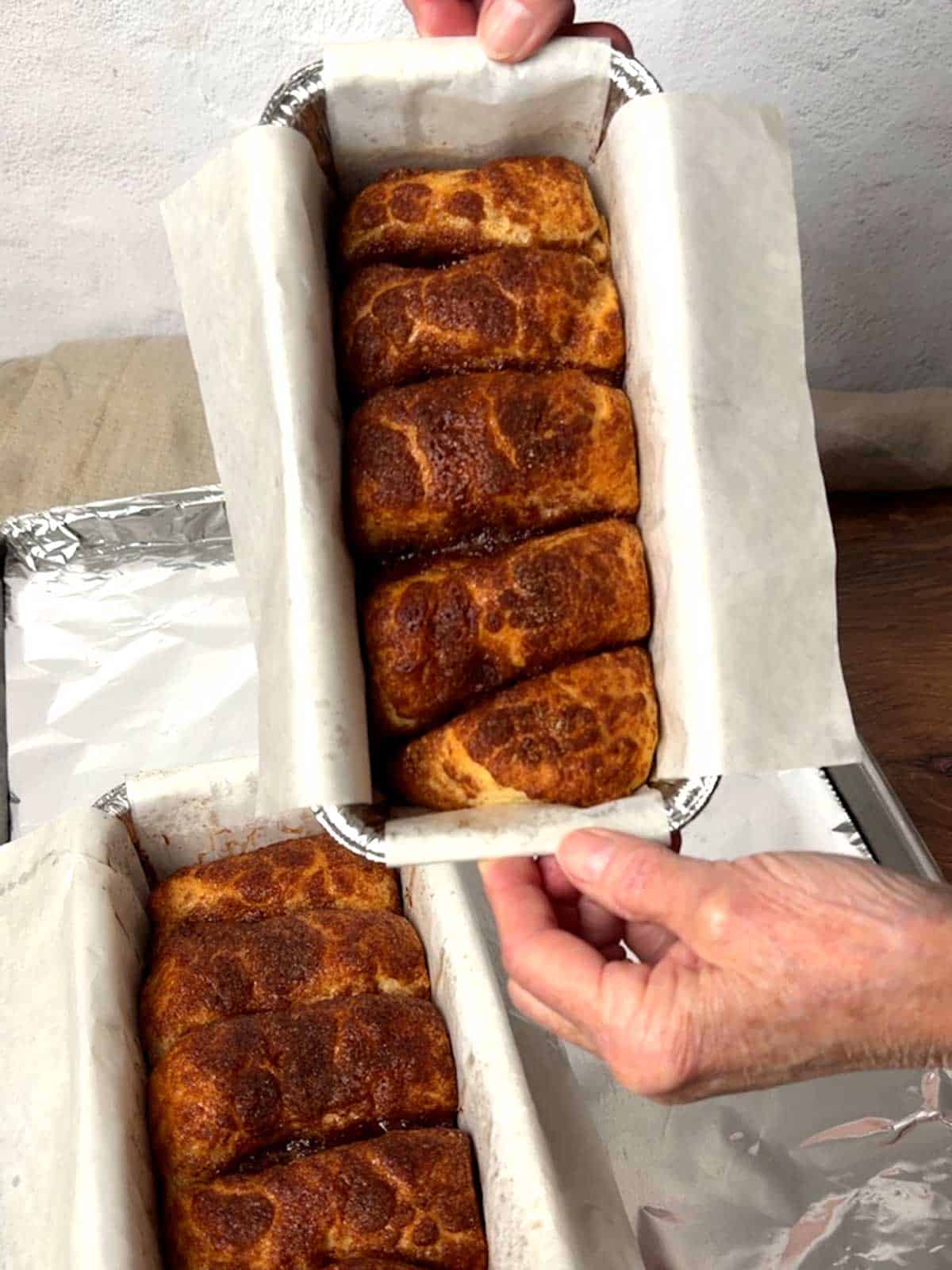
- Bake: Bake the loaves in a preheated 350°F oven for 20 minutes, or until golden and the internal temperature reaches between 190°F and 195°F. Allow to cool for 15 minutes.
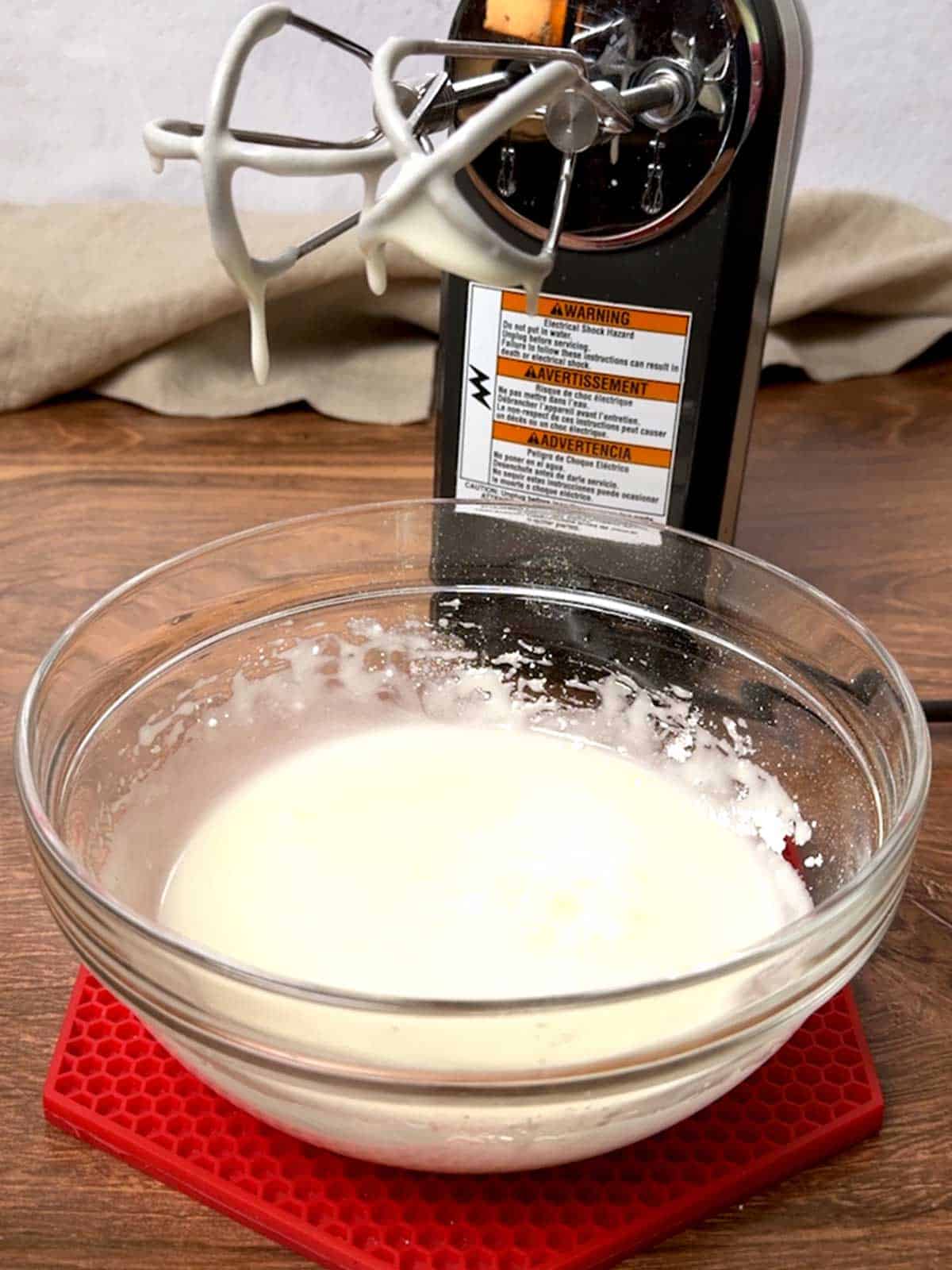
- The icing: While the cinnamon bread is cooling, beat together confectioners' sugar, melted butter, and milk. The consistency should be thin enough to drizzle over the loaves.
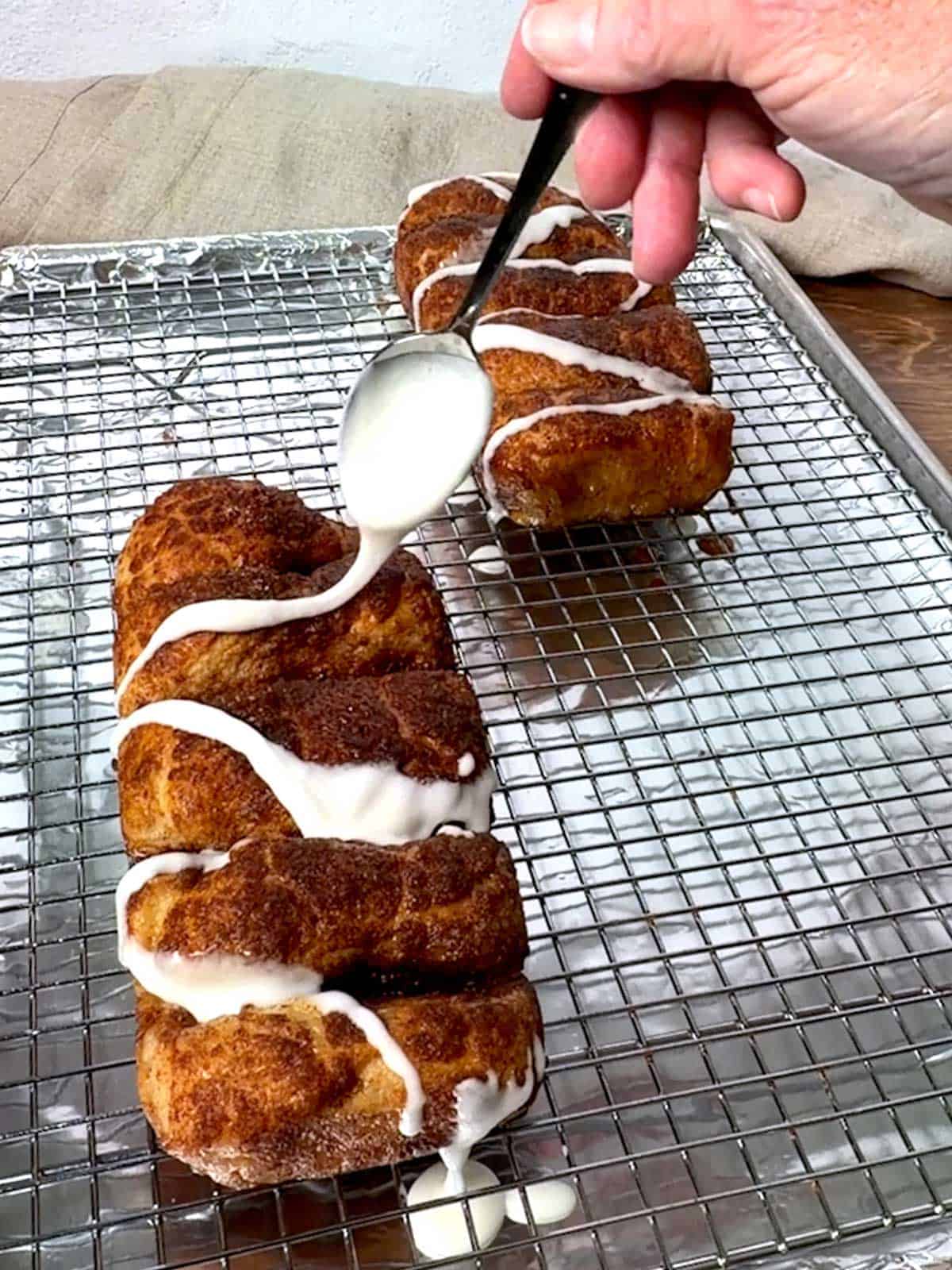
- Drizzle icing: Remove the loaves from the pans and discard the parchment paper. Place on a wire rack set inside a rimmed baking sheet. Drizzle the icing over the warm loaves.
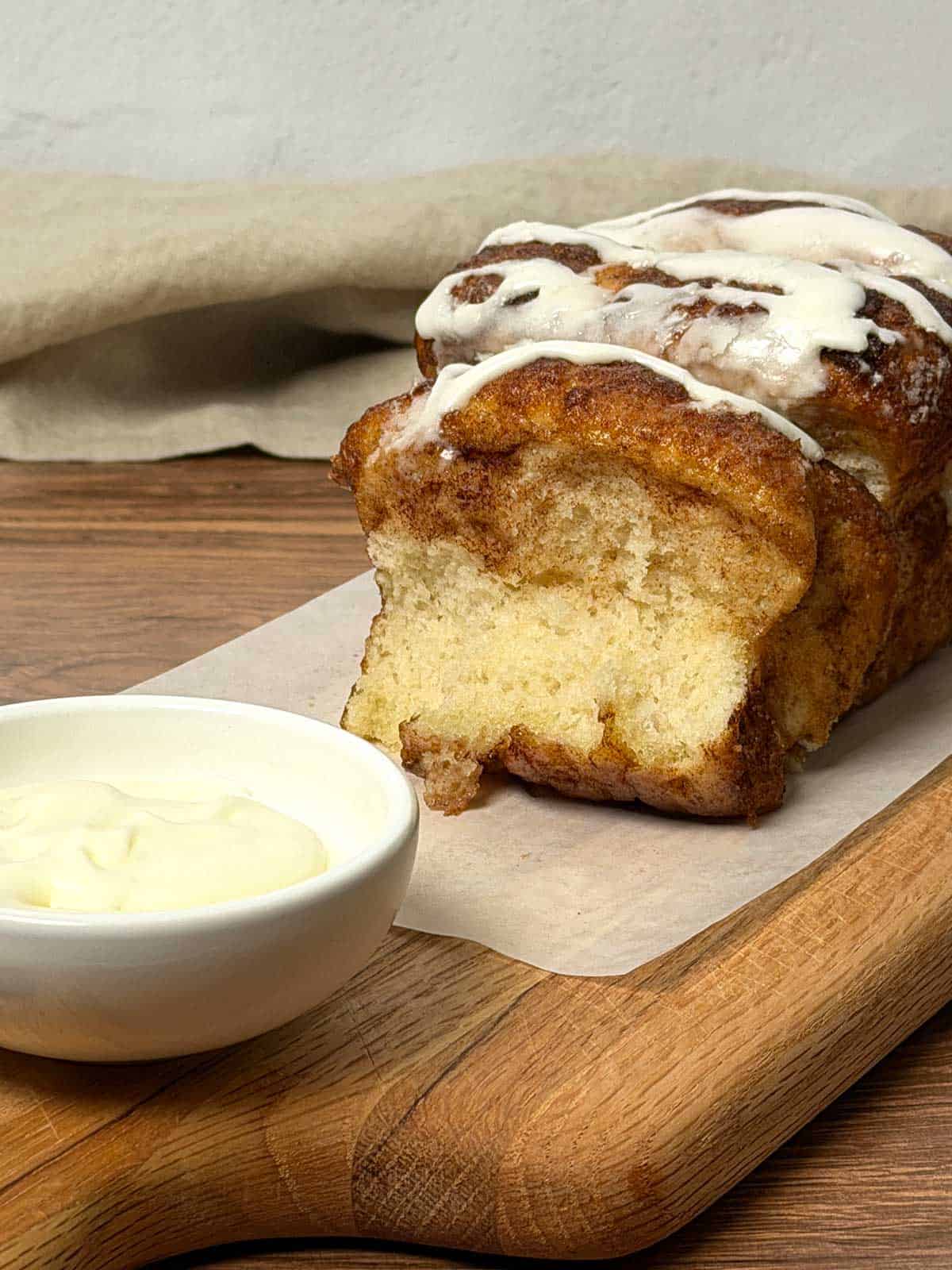
This Dollywood-inspired soft, pull-apart cinnamon bread, with its deeply caramelized cinnamon-sugar coating and sweet vanilla icing, was amazing. I served it with a small bowl of icing on the side for dipping.
Each bite had the perfect amount of cinnamon-sugar, and when dipped in the additional icing, it was out of this world. Do yourself a favor and give this a try. Yum!

PudgeFactor's Test Kitchen
This recipe went through three distinct tests before I was able to declare victory!
Test 1 - Two 9 x 5-inch Loaf Pans/Slashing and Dipping after Second Rise
The first time I made the Cinnamon Bread, I followed the official recipe, including using two 9 x 5-inch loaf pans and waiting until after the second rise to slash and dip the dough. The resulting loaves were disappointingly flat.
This pointed to two obvious problems.
First, the pans were too large relative to the amount of dough. Second, slashing, dipping, and coating fully proofed dough immediately before baking seemed unnecessarily disruptive. The reason was that the dough had no opportunity to recover from that aggressive handling.
Test 2 - One 8 x 3 ¾-inch Loaf Pan/Slashing and Dipping After First Rise
For the second test, I used one 8 x 3 ¾-inch loaf pan. In addition, I shaped the loaves, then slashed and dipped them after the first rise. The loaf rose beautifully and baked to an internal temperature of 192°F in 25 minutes.
Structurally, this was a success, but flavor-wise, there was a problem with the bread-to-cinnamon-sugar ratio. The loaf looked dramatic, but the cinnamon-sugar flavor was not evenly distributed, especially in the center, which was mostly plain bread.
Test 3 - Two 8 x 3 ¾-Inch Loaves
For the final test, I changed only one major variable. Rather than making a single large loaf in the smaller pan, I divided the dough into two equal pieces (6.5 ounces each) and used two 8 x 3 ¾-inch loaf pans.
That was the winner!
Each loaf was about 1 ¾ inches high with plenty of the cinnamon-sugar coating on the pull-apart sections. This meant that each bite had the perfect balance of soft bread and cinnamon sugar.
My daughter agreed. I dropped off one loaf at her house, and she had eaten the entire loaf before I got home. That was a fairly decisive test.

In Case You Were Wondering
Yes, so long as you perform the slash and dip after the first rise. However, the two loaves will be only about 1 inch high.
Weighing ensures that both loaves are the same size. This helps them rise and bake at approximately the same rate. My finished dough weighed 13 ounces, so each loaf weighed 6.5 ounces.
Yes, sort of. I used a food processor because it worked efficiently for the relatively small quantity of dough. A stand mixer should work fine. It depends on the size of your bread machine, since the dough weighs less than a pound.
Yes, but I prefer to drizzle some over the loaves and serve the rest on the side. This keeps the cinnamon crust visible while allowing everyone to add as much icing as they want.
Final Thoughts - Recipe Success Tips
Use 8 x 3 ¾ or 8 x 4-inch loaf pans rather than the 9 x 5-inch pans included in the official recipe.
Consider using a food processor instead of a stand mixer (as called for in the official recipe) for convenience.
The official recipe did not include weights; this version does. Weigh your ingredients. Small differences in the quantity of flour can significantly change the consistency of a small yeast dough.
Divide the dough by weight so that both loaves bake evenly and look comparable.
Slash and coat the dough after the first rise, rather than after the second, as the official recipe calls for.
Finally, do not skimp on the icing. It's a simple recipe that takes the cinnamon bread over the top.
Other Yeast Doughs using a Food Processor
Don't discount the effectiveness of a food processor for making yeast doughs. Here are some of my favorites:



Did you make this recipe? We'd love to know how it turned out! Leave a review below. Then, share a picture on Instagram and tag @pudgefactor so we can see it.
Don't forget to follow us on Pinterest, Facebook, YouTube, Flipboard, and Instagram.
Thank you so much for visiting PudgeFactor. We hope you'll come back!
Recipe
Want to Save This Recipe?
Enter your email & I'll send it to your inbox. Plus, enjoy weekly doses of culinary inspiration as a bonus!
By submitting this form, you consent to receive emails from Pudge Factor.

Dollywood-Inspired Cinnamon Bread
Equipment
- Food processor (may also use a stand mixer)
- 2 8 x 3 ¾ or 8 x 4-inch loaf pans
- 4 cup measuring cup or bowl for proofing dough
- Parchment paper
- Bench scraper
- Sharp knife
Ingredients
Bread Dough
- 1 ½ cups (7.5 ounces, 213 grams) bread flour
- 1 Tablespoon (0.4375 ounces, 12 grams) granulated sugar
- ½ teaspoon fine sea salt (See Tip 1)
- ¾ teaspoon instant or bread machine yeast (See Tip 2)
- 2 Tablespoons (1 ounce, 28 grams) unsalted butter, melted and cooled
- ½ cup (4 ounces, 114 grams) cold, filtered water (See Tips 3 and 4)
Topping
- 6 tablespoons (3 ounces, 85 grams) unsalted butter, melted
- 2 tablespoons (1.06 ounces, 30 grams) light corn syrup
- ¼ cup (1.75 ounces, 50 grams) granulated sugar
- ¼ cup (1.875 ounces, 53 grams) light brown sugar, packed
- 1 tablespoon (0.25 ounces, 7 grams) ground cinnamon
Icing
- 1 ¼ cups (5 ounces, 142 grams) confectioners' sugar
- Pinch salt
- 2 Tablespoons (1 ounce, 28 grams) unsalted butter, melted
- 3 Tablespoons (1.5 ounces, 43 grams) milk, plus more if necessary to reach the desired consistency (See Tip 5)
Instructions
Bread Dough
- Add the bread flour, sugar, salt, and yeast to the bowl of a food processor fitted with the steel blade. Pulse 4 to 5 times to combine.
- Remove the feed tube. With the food processor running, slowly add the water through the feed tube and process for about 10 seconds, until the dough is just combined and no dry flour remains. Let the dough rest for 10 minutes.
- With the food processor running, add the melted butter through the feed tube. Process until the dough forms a satiny ball that clears the sides of the food processor, about 30 seconds.
- Transfer the dough ball to a lightly greased bowl. Cover with plastic wrap and let it rise in a warm place until doubled in size, about 30 minutes. (See Tip 6)
Topping
- Whisk together the melted butter and corn syrup in a 6-inch or larger dish. In another 6-inch or larger dish, combine the granulated sugar, light brown sugar, and cinnamon.
- Line two 8x3 ¾ or 8x4-inch loaf pans with parchment paper, leaving an overhang on both sides.
- Transfer the dough to a parchment-lined surface, and divide into two equal pieces. Form each piece into a 6x3-inch rough rectangle. Make four deep crosswise slashes in each loaf, making sure not to cut all the way through.
- Dip each loaf in the mixture, coating it completely. Then coat with the cinnamon-sugar mixture, making sure it gets into all the crevices.
- Place loaves in prepared loaf pans and drizzle with any cinnamon sugar and butter. Cover and allow to rise in a warm location until puffy, around 45 minutes.
- Preheat the oven to 350°F. Once the loaves have risen bake in the preheated oven until golden and they reach an internal temperature of 190° to 195°F, about 20 minutes
- Transfer the bread to a wire rack to cool for around 15 minutes.
Icing
- While the cinnamon bread is cooling, beat together the confectioners' sugar, salt, melted butter, and 3 tablespoons of milk until smooth. Add a bit more milk if needed to achieve the proper consistency.
- Drizzle the icing on the warm loaves and serve the remaining icing on the side for dipping.
- Yield: two loaves
Video
Tips/Notes
- May also use table salt.
- I always use instant or bread machine yeast because it does not require blooming like active yeast. Instant yeast can be added directly to the other ingredients.
- Use filtered water rather than tap water. Tap water contains chlorine, which can negatively impact yeast growth.
- The food processor generates a lot of heat as it processes the dough. Starting with cold water helps prevent the dough from overheating.
- The official recipe called for 3 to 5 tablespoons of milk. I ended up using 3 ½ tablespoons. However, adjust the amount of milk to achieve your desired consistency.
- I used the proof function on my oven for the rise. The actual time may vary depending on the environment.




Leave a Reply